
EXCLUSIVE: INTERVIEW WITH UUHAI !!
“Heavy metal cannot stop wars, but it can inspire the people who will build peace. It cannot erase division, but it can create moments where division disappears. It cannot solve every problem, but it can open hearts and minds.”
DISC REVIEW “HUMAN HERDS”
「メタルは新たな自由の時代に入り、様々な文化がジャンルの中で真摯に自己表現できるようになったと確信しているよ。メタルは世界の限られた場所で生まれたけど、その感情的な言語は無限大だ。強さ、闘争、アイデンティティ、そして意味の探求を語ってくれる。そうしたテーマは地球上のあらゆる文化が共有する経験。だからこそ、メタルは今、その起源をはるかに超えて広がっているんだと思う」
2025年。メタルの生命力、感染力、包容力はその可能性をますます広げています。モダン・メタルに宿る寛容さは、世界の壁を壊し、さまざまな文化を包容していきます。そうして、世界中に根を張ったメタルの種子は、その多様な音の枝葉を存分に伸ばしているのです。
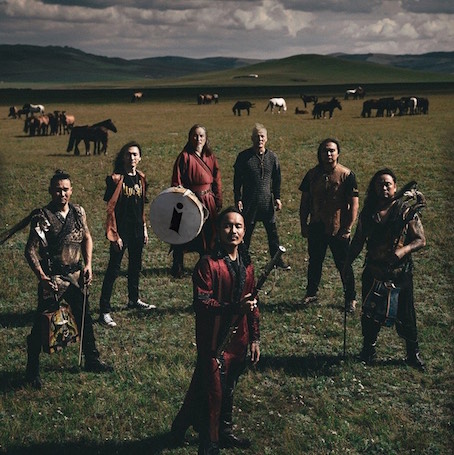
モンゴルに生まれた UUHAI も、そうしたメタルの自由を謳歌するバンドのひとつ。彼らは祖先の英雄チンギス・ハーンに学んだ勇気、正義、責任、リーダーシップを噛み締めながら、共感と団結というまた別のやり方で世界を席巻しようとしています。
「Uuhai は、深い歴史的、精神的な意味を持つ力強いモンゴル語だ。僕たちの祖先が戦いや儀式、そして団結と勇気が必要な瞬間に使っていた古代の呼び声なんだ。それは単なる叫び以上のもの。それは共有された精神の声なんだ。それは単なる名前ではない。僕たちの声であり、アイデンティティであり、モンゴルの魂との繋がりなんだよ」
勇気、強さ、そして団結を象徴する古来の戦いの雄叫び、UUHAI という名前は決して偶然選ばれたわけではありません。伝統と現代を結ぶため。草原に轟いた一致団結の雄叫びを、暗い現代社会へと響かせるため。だからこそ、当然その叫びのエネルギーは彼らの音楽にも反映されています。
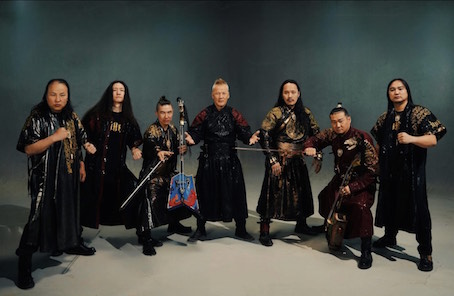
モンゴルから先に世界的成功を収めた THE HU はフォークとロックのバランスを巧みに取りますが、UUHAI はより断固としたメタル寄りのサウンドを追求しています。そして、彼らのデビュー・フル “Human Herds” は、まさにその真髄でしょう。タイトルの一部は英語ですが、歌詞は彼らのルーツに忠実で、すべてモンゴル語で歌われています。だからこそ、彼らの楽曲にはステップ民族の力強さがもたらされ、草原の響きを響かせる馬頭琴(モリンホール)や、世界遺産にも登録されている喉歌といった伝統的な楽器が、より一層、真実の音をもって響き渡ります。喉歌のスピリチュアルな神秘、悍馬のように力強いリフ、草原から吹き寄せるギターソロ、そして馬頭琴独特の響きが、壮大なスケールの楽曲へと溶け合います。このシンプルな二弦楽器と人に備わる声帯が、修練と創意工夫を経てメタルの包容力に包まれる時、これほどまでに緊張感と感情を呼び起こせるものなのでしょうか…まさにモンゴルは蒼き狼、メタルは白き牝鹿。
「今日、世界は様々な闘争に直面している。戦争、分断、差別、そして恐怖が多くの場所で蔓延しているんだ。こうした課題は力で解決できるものではない。理解と団結をもって立ち向かわなければならないんだよ。
こうした世界において、ヘヴィ・メタルは特別な役割を担っている。メタルは感情を隠さない。正直で、率直で、恐れることなく真実を語る。社会が沈黙に包まれたとき、メタルは声をあげられない人々の声となる。怒り、悲しみ、そしてフラストレーションを表現するだけでなく、そうした感情を強さと繋がりへと変える力も持ち合わせているんだ。
UUHAI にとって、メタルは単なる音楽ジャンルではない。メタルは人々に共通の人間性を思い出させる力であり、国境や文化を超えたメッセージを届けることができるもの。出会うことのない人々でさえ、音楽の中で同じ鼓動を感じ、一つに繋がることができるんだ」
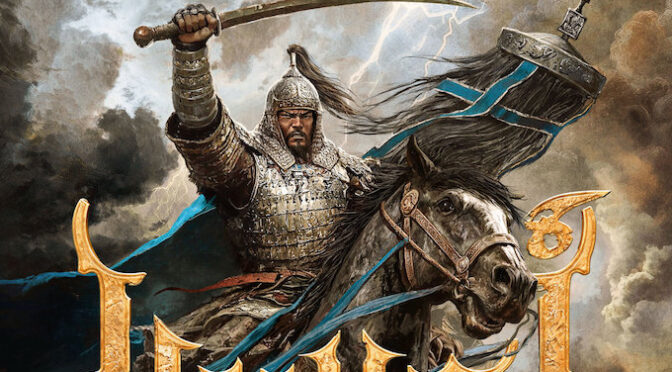
長い歴史の中で、モンゴルの人々は自然と調和しながら生きてきました。そして、誇り高き戦士としても。母なる大地が泣く時、それは人類への警告。世界が歴史の暗黒面を忘れ去り暗雲に包まれる時、戦士は人々を守るため恐れず、怯まず、勇気を持って武器を手に取ります。ヘヴィ・メタルという剣には、どんな弾圧も抑圧も敵いません。そうして、彼らは国境も文化も超えて、古の英雄の如く世界を、そして人と自然を再びひとつにつなげるのです。Uuhai! の雄叫びとともに。
今回弊誌では、UUHAI にインタビューを行うことが出来ました。「ヘヴィ・メタルは戦争を止めることはできないけど、平和を築こうと願う人々を鼓舞することができる。分断を消し去ることはできないけど、ライブで分断が消え去る瞬間を作り出すことはできる。すべての問題を解決することはできないけど、人々の心と精神を開くことはできる」素晴らしい言葉ですね。どうぞ!!
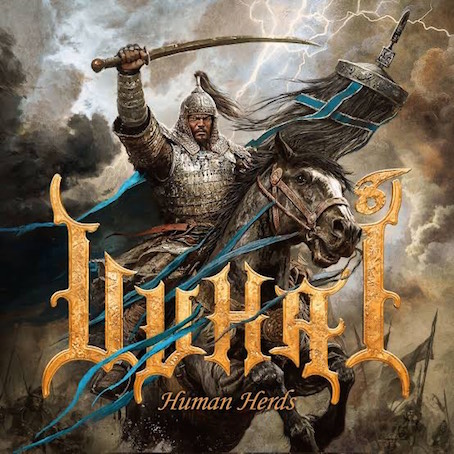
UUHAI “HUMAN HERDS” : 10/10
INTERVIEW WITH UUHAI
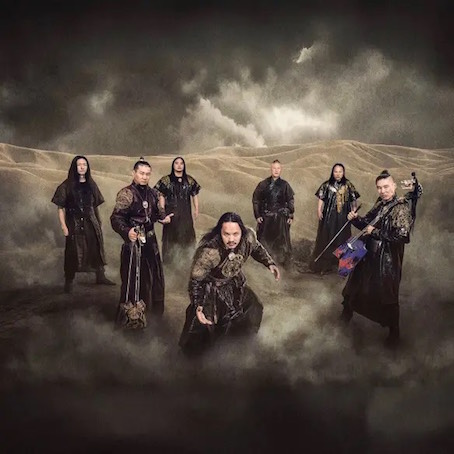
Q1: First of all, how did you come across metal and start playing in Mongolia, a place where metal was not that popular?
【UUHAI】: For many of us in Uuhai, our introduction to metal came during a time when Mongolia was just beginning to open its doors to the outside world. Before the nineteen nineties, foreign music was very limited in our country. Only a few cassettes or CDs reached Mongolia through travelers, students returning from abroad, or friends who carefully shared whatever rare recordings they could find. When we first heard heavy music, it felt like discovering a completely new form of emotional expression.
In those early years, metal was not popular and not widely accepted in society. Very few musicians were brave enough to play louder and heavier styles. Wearing long hair, torn jeans, or metal accessories often brought challenges, and performing aggressive music in public required courage. But those pioneers opened the way for everyone who came after.
As young musicians who grew up surrounded by the sounds of the steppe, the rhythm of horses, and the deep expression of throat singing, we felt a natural connection to the energy of metal. The intensity of the music matched the intensity of our land, our history, and the spirit of our ancestors. Each member of Uuhai found metal in a different way. Some of us studied music formally and discovered rock and metal during our training. Others, like Ombo, followed their passion completely on their own, without any formal education, driven only by dreams and determination. He created music from pure instinct and emotion, building his style from the heart rather than from textbooks.
Step by step, the scene slowly began to grow. Young musicians formed bands, shared equipment, and helped one another. We listened to whatever recordings we could find, trading tapes and CDs like precious treasures. It was a small community, but it was full of passion and curiosity.
Metal in Mongolia did not begin because it was popular. It began because a few people loved it enough to fight for it. For Uuhai, that spirit is still alive today. We carry the same hunger for creativity and the same belief that music can transform both the artist and the listener.
Today, Uuhai stands on international stages, but our roots go back to those early days when metal first entered our country. That journey shaped our identity and helped us understand why we must protect our culture while sharing it with the world. Metal gave us a voice, and our traditions gave that voice a soul..
Q1: まず、メタルがそれほど普及していなかったモンゴルで、どのようにしてメタルと出会い、演奏を始めたのですか?
【UUHAI】: 僕たちの多くにとって、メタルとの出会いは、モンゴルが外界への扉を開き始めたばかりの時代だった。1990年代以前、モンゴルで外国の音楽に触れる機会は非常に限られていたんだ。旅行者や帰国した学生、あるいは友人たちが見つけた貴重な音源、カセットテープやCDをごくわずかに共有してくれたくらいでね。だからこそ、ヘヴィ・ミュージックを初めて聴いた時は、まるで全く新しい感情表現を発見したかのような感覚だったな。
当時、メタルは人気がなく、社会に広く受け入れられていなかった。だから、よりラウドでヘヴィなスタイルで演奏する勇気のあるミュージシャンはごくわずかだった。長髪、破れたジーンズ、メタルのアクセサリーを身につけることは、しばしば困難を伴い、人前でアグレッシブな音楽を演奏するには勇気が必要だったんだ。だけど、そうした先駆者たちが、後を継ぐすべての人々への道を切り開いたんだ。
草原の音、ギャロップする馬のリズム、そして喉歌の深い表現に囲まれて育った若いミュージシャンとして、僕たちはメタルのエネルギーに自然と共感を覚えたね。メタルの熱狂は、僕たちの土地、歴史、そして祖先の精神の熱狂と重なっていたんだ。UUHAI のメンバーはそれぞれ異なる方法でメタルと出会った。中には正式に音楽を学び、勉強中にロックとメタルに出会った者もいた。Ombo のように、正式な教育を受けることなく、夢と決意だけを原動力に情熱を追い求めた者もた。Ombo は純粋な本能と感情から音楽を生み出し、教科書ではなく心から自分のスタイルを築き上げていったんだ。
モンゴルのシーンは少しずつ成長し始めていた。若いミュージシャンたちはバンドを結成し、機材を共有し、互いに助け合っていたね。僕たちは手に入るレコードは何でも聴き、テープやCDを宝物のように交換したものだ。小さなコミュニティだったけど、そこは情熱と好奇心に満ち溢れていたんだ。
モンゴルのメタルは、決して人気があったから始まったわけではない。少数の人々がメタルを愛し、闘い続けたからこそ始まったんだ。UUHAI にとって、その精神は今もなお生き続けているよ。僕たちは今もその精神…創造性への渇望と、音楽はアーティストとリスナーの両方を変革できるという信念を、変わらず持ち続けているんだ。
今日、UUHAI は国際的な舞台に立っているけど、僕たちのルーツはメタルが初めてこの国に到来した黎明期に遡る。その旅が僕たちのアイデンティティを形作り、自分たちの文化を守りながらも世界と共有しなければならない理由を理解する助けとなったんだ。メタルは僕たちに声を与え、僕たちの伝統はその声に魂を与えたんだよ。
Q2: “Uuhai” seems to be a Mongolian word. Why did you choose this word as the name of the band?
【UUHAI】: Uuhai is a powerful Mongolian word that carries deep historical and spiritual meaning. It is an ancient call used by our ancestors during battle, during rituals, and during moments when unity and courage were needed. It is more than a shout. It is the voice of a shared spirit.
We chose this name because it represents everything we want to express as a band. In 2020, when we officially gave the band its name, we understood that Uuhai was not only a word. It was the living force that connected us to our ancestors, our land, and our identity. When our elders shouted Uuhai, it was a prayer for strength, good fortune, and protection. When warriors shouted Uuhai, their hearts beat as one. This is the same feeling we want to share with the world.
Uuhai is also the core message of our music. We do not use it simply as a title. We use it as a call for unity, awareness, and harmony between people and nature. Our songs carry the same energy that once echoed across the steppe. When audiences shout Uuhai with us, even if they do not know the language, they still feel the emotion and the unity behind the word.
The name reflects our musical purpose as well. Uuhai stands at the meeting point of ancient tradition and modern expression. Our music is built on throat singing, morin khuur, and the wisdom of our heritage, blended with the strength of contemporary rock. The word embodies that combination. It is ancient, but still alive today. Most importantly, Uuhai reminds us to stay true to our roots. Every time we step on stage, every time we record a song, we carry the spirit of that call with us. It keeps us grounded and gives us strength.
That is why we chose Uuhai. It is not just our name. It is our voice, our identity, and our connection to the soul of Mongolia.
Q2: “Uuhai” とはモンゴル語のようですが、なぜこの言葉をバンド名に選んだんですか?
【UUHAI】: Uuhai は、深い歴史的、精神的な意味を持つ力強いモンゴル語だ。僕たちの祖先が戦いや儀式、そして団結と勇気が必要な瞬間に使っていた古代の呼び声なんだ。それは単なる叫び以上のもの。それは共有された精神の声なんだ。
僕たちがこの言葉をバンド名を選んだのは、バンドとして表現したいすべてを体現しているから。2020年に正式にバンド名を決めた時、僕たちは Uuhai が単なる言葉ではないことを理解していた。Uuhai とは、僕たちを祖先、僕たちの土地、そして僕たちのアイデンティティと結びつける、生きた力なんだとね。僕たちの長老たちが Uuhai と叫んだ時、それは力、幸運、そして守護への祈りとなった。戦士たちが Uuhai と叫んだ時、彼らの心は一つになった。これこそが、僕たちが世界と共有したい感情なんだよ。
Uuhai は、僕たちの音楽の核となるメッセージでもある。僕たちはそれを単なるタイトルとして使っているのではなく、団結、意識、そして人々と自然の調和を求める呼びかけとして使っている。僕たちの歌には、かつて草原に響き渡ったのと同じエネルギーが宿っているよ。観客が僕たちと一緒に Uuhai と叫ぶ時、彼らはたとえ言葉が分からなくても、その言葉の背後にある感情と一体感を感じ取ることができるんだ。
この名前は、僕たちの音楽的目的も反映しているよ。Uuhai は、古代の伝統と現代的な表現の交差点に立っている。僕たちの音楽は、喉歌、馬頭琴、そしてモンゴル伝統の知恵に、現代ロックの力強さが融合した上で成り立っているんだ。この言葉は、まさにその融合を体現しているよ。古代から伝わる言葉でありながら、今もなお強く生き続けているからね。そして何よりも、Uuhai は、僕たちにルーツに忠実であり続けることを思い出させてくれる。ステージに立つたび、曲をレコーディングするたび、僕たちは Uuhai という呼びかけの精神を心に刻み、地に足をつけ、力をもらう。
だからこそ僕たちは Uuhai を選んだんだ。それは単なる名前ではない。僕たちの声であり、アイデンティティであり、モンゴルの魂との繋がりなんだよ。
Q3: I believe that you attract worldwide attention because you mix metal/rock with traditional Mongolian music in a unique way. Could you tell us the origin of this “Hunnu Rock”?
【UUHAI】: We usually describe our music as Mongol Rock rather than Hunnu Rock. While the term Hunnu Rock is sometimes used to describe music that draws inspiration from very ancient steppe civilizations, we feel that Mongol Rock better represents who we are and what we express today.
Our music is rooted in the living culture of Mongolia as it exists now. We sing in modern Mongolian, we reflect on contemporary society, and we speak about present day responsibility toward nature, humanity, and the future. The word Mongol connects our sound directly to our people, our language, and our current identity, not only to a distant historical era.
That does not mean we reject ancient heritage. On the contrary, our music carries ancestral spirit, traditional instruments, throat singing, and historical awareness. But we are not trying to recreate the past or place ourselves inside a single ancient concept. We are expressing how Mongolian culture lives, breathes, and evolves in the modern world.
Mongol Rock feels honest to us because it allows space for both tradition and change. It reflects the Mongolia we come from today, a country that respects its roots while standing on the global stage. Our sound carries the voice of the steppe, but it also speaks to modern humanity and global listeners.
Q3: UUHAI は、メタル/ロックとモンゴルの伝統音楽をユニークな方法でミックスしているからこそ、世界的に注目されているのだと思います。 この “Hunnu Rock” の成り立ちを教えていただけますか?
【UUHAI】: 僕たちは普段、自分たちの音楽を “Hunnu Rock” ではなくモンゴル・ロックと表現しているんだ。”Hunnu Rock” という言葉は、非常に古い騎馬民族のステップ文明からインスピレーションを得た音楽を指すこともあるけど、モンゴル・ロックの方が僕たちの本質や、僕たちが今表現しているものをよりよく表していると考えているからね。
僕たちの音楽は、今を生きるモンゴルの文化に根ざしている。現代モンゴル語で歌い、現代社会を見つめ、自然、人類、そして未来に対する現代の責任について語っている。”モンゴル” という言葉は、僕たちのサウンドを遠い歴史的時代だけでなく、今を生きる人々、言語、そして現在のアイデンティティに直接結びつけてくれる。
それは、僕たちが古代の遺産を否定するという意味ではないよ。むしろ、僕たちの音楽は祖先の精神、伝統楽器、喉歌、そして歴史認識を体現している。ただし、僕たちは過去を再現したり、単一の古代の概念に身を委ねたりしようとしているわけではないんだ。僕たちは、モンゴル文化が現代世界においてどのように生き、息づき、進化しているかを表現したいんだ。
モンゴル・ロックは、伝統と変化の両方に余地を与えてくれるから、僕たちにとって誠実な音楽だと感じているよ。それは、僕たちが今いるモンゴル、つまり世界の舞台に立ちながらも自らのルーツを重んじる国を反映しているんだ。僕たちの音は草原の声を伝えるだけでなく、現代の人間性や世界中のリスナーにも訴えかけるからね。
Q4: In fact, what kind of a global success THE HU is for you?
【UUHAI】: The global success of The Hu is meaningful for us because it showed the world that Mongolian music has a powerful place on the international stage. Their achievements opened many eyes and helped listeners discover the beauty of our culture, our instruments, and our way of expressing emotion through sound. For that, we have respect. When a Mongolian artist succeeds, it reflects something positive for our entire country.
At the same time, Uuhai follows its own artistic path. We are inspired by the strength of Mongolian culture itself, not by comparison with any particular band. Our sound is heavier, more spiritual, and deeply connected to the ancestral voice of throat singing and the emotion of the morin khuur. We stand on the same land, but we walk our own road.
For us, the true success is that Mongolian artists of different styles are now reaching global audiences. This shows that our culture is rich, diverse, and capable of touching people far beyond our borders. It gives us motivation to continue developing our own identity and to share the spirit of Mongolia in a way that is unique to Uuhai.
In the end, when one Mongolian band is recognized internationally, it creates more curiosity and appreciation for all Mongolian music. And if Uuhai can contribute to that growing interest and bring more of our heritage to the world, then that is a success we are proud to be part of..
Q4: 実際、先に世界で大きな成功を収めた THE HU は、あなたにとってどのような存在なのでしょう?
【UUHAI】: THE HU の世界的な成功は、モンゴル音楽が国際舞台で力強い地位を占めていることを世界に示したという点で、僕たちにとって大きな意義を持っている。彼らの功績は多くの人々の目を開かせ、リスナーがモンゴル文化、楽器、そして音を通して感情を表現することの美しさを発見する助けとなったね。僕たちはその偉業に敬意を抱いているよ。モンゴルのアーティストが成功することは、国全体にとって良いことなんだ。
同時に、UUHAI は独自の芸術的な道を歩んでいる。僕たちは特定のバンドと比較するのではなく、モンゴル文化そのものの力強さにインスピレーションを受けているからね。僕たちのサウンドはより重厚で、よりスピリチュアルで、喉歌の祖先の声や馬頭琴の感情と深く結びついている。つまり、僕たちは THE HU と同じ地に立っているけど、独自の道を歩んでいるんだ。
僕たちにとって真の成功とは、様々なスタイルのモンゴルのアーティストが今や世界中のリスナーに届いていること。これは、僕たちの文化が豊かで多様性に富み、国境をはるかに越えた人々の心に響く力を持っていることを示している。その事実は、僕たち自身のアイデンティティを発展させ続け、UUHAI ならではの方法でモンゴルの精神を共有し続けるためのモチベーションとなるんだ。
最終的に、モンゴルのバンドの一つが国際的に認知されることで、モンゴル音楽全体への好奇心と理解がさらに深まっていく。そして、UUHAI がその高まりに貢献し、僕たちの伝統を世界に広めることができれば、それは僕たちにとって大きな成功であり、その一翼を担えたことを誇りに思うんだ。
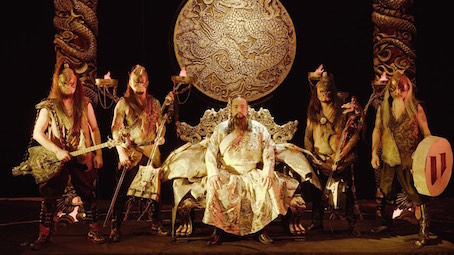
Q5: OK, let’s talk about your amazing debut-full “Human Herds”. When I had an interview with Nature G. of Tengger Cavalry (R.I.P), he said his songs are “It’s all about (Mongolian) Shaman, history, nature, horse and warrior spirit.” How about you? Is there any concept or lyrical themes on this record?
【UUHAI】: Human Herds carries its own concept, shaped by the history, spirit, and worldview of the Mongolian people, but expressed through the voice of Uuhai. While every Mongolian artist draws inspiration from similar sources such as nature, ancestors, and the warrior spirit, our album approaches these themes in a way that reflects who we are as a band.
The central theme of Human Herds is the dual nature of humanity. We look at how people move together, how we influence the earth, and how our choices shape the future. The album speaks about the balance between creation and destruction, which is a concept deeply rooted in Mongolian thought. Our ancestors always taught that human beings must live in harmony with the land that sustains them. When Mother Earth cries, it is a warning for all of us.
Nature is a major pillar of the album. Not only as scenery, but as a living presence. The wind, the sky, the mountains, and the steppe are treated with respect in our culture, and they became emotional guides for many of the songs. When the morin khuur sings or when throat singing rises, it is not just music. It is the voice of the land.
The ancestral spirit is another major theme. Songs like Uuhai and Secret History of the Mongols carry the strength, unity, and wisdom that shaped our history. We do not sing these themes to glorify the past. We sing them to show that the values of courage, respect, and responsibility still matter today. These songs remind us that the warrior spirit is not only about battle. It is about character, leadership, and protecting the world around us.
Human Herds also speaks about modern society. It shows the tension between tradition and the fast changing world. It asks how we can remain connected to our roots while facing the challenges of the present. This is especially important for us as Mongolians who travel globally and perform on international stages. We carry the old and the new together.
So yes, there is a concept behind the record.
It is about humanity, nature, ancestors, responsibility, unity, and awakening.
It is about remembering who we are under one sun and one moon.
Q5: では、あなたたちの素晴らしきデビュー・フル “Human Herds” について話しましょう。TENGGER CAVALRY の Nature・G(R.I.P.)にインタビューしたとき、彼は自分の曲は “(モンゴルの)シャーマン、歴史、自然、馬、そして戦士の精神がすべてだ” と語ってくれました。 あなたはどうですか?
【UUHAI】: “Human Herds” は、モンゴル人の歴史、精神、そして世界観に形作られた独自のコンセプトを掲げているけど、それを UUHAI の声を通して表現しているんだ。モンゴルのアーティストは皆、自然、祖先、戦士の精神といった共通の源からインスピレーションを得ているけど、僕たちのアルバムは、バンドとしての自分たちらしさを反映しながらそうしたテーマにアプローチしているよ。
“Human Herds” のテーマは、人間の二面性。人々がどのように共存し、地球にどのような影響を与え、そして僕たちの選択がどのように未来を形作っていくのかを探求しているんだ。このアルバムは、モンゴルの思想に深く根ざした概念である、創造と破壊のバランスについて語っているんだよ。僕たちの祖先は常に、人間は自分たちを支える大地と調和して生きなければならないと教えてきた。母なる大地が泣く時、それは僕たち全員への警告なんだよ。
自然はアルバムの大きな柱だ。風景としてだけでなく、生き生きとした存在として。風、空、山、そして草原は、僕たちの文化において敬意を持って扱われ、多くの曲の感情的な導き手となっている。馬頭琴が歌い、喉歌が高らかに響く時、それは単なる音楽ではない。それは大地の声なんだ。
祖先の魂もまた、もう一つの重要なテーマだ。”Uuhai” や “Secret History of the Mongols” といった歌は、僕たちの歴史を形作った力強さ、結束、そして知恵を体現しているよ。僕たちは、こうしたテーマを過去を称えるために歌うのではない。勇気、敬意、そして責任という価値観が、今日でもなお重要であることを示すために歌うんだ。こうした歌は、戦士の精神とは戦いだけではないことを僕たちに思い出させてくれる。戦士の精神とは人格、リーダーシップ、そして僕たちを取り巻く世界を守ることなんだ。
“Human Herds” は現代社会についても語っているよ。伝統と急速に変化する世界との間の緊張関係を描いていてね。現代の課題に直面しながらも、どのように自分たちのルーツとの繋がりを保つことができるのかを問いかけているよ。これは、世界を旅し、国際的な舞台で演奏する僕たちモンゴル人にとって特に重要だ。僕たちは古いものと新しいものを共に担っているからね。
そう、このレコードにはコンセプトがある。それは、人間性、自然、祖先、責任、結束、そして覚醒について。それは、一つの太陽と一つの月の下で、自分たちが誰であるかを思い出すことなんだ。
Q6: It is amazing that when rock and throat singing intersect, they create such an emotional sound! It is indeed a great challenge to sing in Mongolian and use throat singing in rock music that originated in the West, would you agree?
【UUHAI】: Yes, we agree that blending Mongolian throat singing with Western rock is a great challenge, but it is also one of the most beautiful parts of our music. These two sound worlds grew from very different histories. Rock carries the energy and rebellion of the West, while throat singing comes from the silence of the steppe, the breath of nature, and the spiritual practices of our ancestors.
Singing in Mongolian adds another layer of complexity. The language is rich, rhythmic, and deeply connected to the land. It follows a completely different flow than English. When we place Mongolian lyrics inside rock structures, we must reshape the rhythm while still protecting the natural character of the language. It requires careful thought, respect, and creativity.
Throat singing itself is a demanding technique. It depends on strong breath control, physical discipline, and many years of training. When we combine it with distorted guitars and powerful drums, we must make sure that the traditional sound is not drowned out. Instead, it must shine through the music as the guiding spirit. That balance takes time to master.
But the emotional impact makes the challenge worth it.
When throat singing rises over heavy rock, something unique happens. The ancient and the modern meet in one voice. Listeners who have never heard our language or our traditions still feel the vibration in their bodies. They feel the emotion even before they understand the meaning.
This is why we believe the combination works so naturally.
Both rock and Mongolian music carry deep emotion. Both connect directly to the heart. Both are honest forms of expression.
Q6: ロックと喉歌が融合すると、こんなにもエモーショナルなサウンドが生まれるなんて、本当に驚きです!西洋発祥のロック・ミュージックにモンゴル語で喉歌を取り入れるのは、本当に大きな挑戦ですよね?
【UUHAI】: モンゴルの喉歌と西洋のロックを融合させることが大きな挑戦であることは間違いないね。しかし、同時に僕たちの音楽の最も美しい側面の一つでもあると思う。この二つの音世界は、全く異なる歴史から生まれた。ロックは西洋のエネルギーと反骨精神を体現する一方、喉歌は草原の静寂、自然の息吹、そして祖先の精神的な実践から生まれたものだからね。
モンゴル語で歌うことは、更なる複雑さをもたらしてくれる。モンゴル語は豊かでリズミカルで、大地と深く結びついているからね。英語とは全く異なる流れを辿る。だからロックの構造にモンゴル語の歌詞を組み込む際には、言語の自然な特徴を守りながらも、リズムを再構築する必要があるんだよ。綿密な思考、敬意、そして創造性が求められるんだ。
喉歌自体も高度な技術だ。しっかりとした呼吸のコントロール、身体の鍛錬、そして長年の訓練が不可欠だよ。歪んだギターと力強いドラムと組み合わせる際には、伝統的な響きがかき消されないように注意しなければならない。むしろ、音楽全体を導く精霊として輝かなければならないからね。そのバランスを習得するには時間がかかるんだ。
しかし、感情に訴えかける喉歌の衝撃は、その挑戦に見合うだけの価値がある。喉歌がヘヴィ・ロックに響く時、他に類を見ない何かが起こる。古代と現代が一つの声で融合するんだ。僕たちの言語や伝統を初めて耳にしたリスナーでさえ、その振動を体で感じる。意味を理解する前に、感情を揺さぶられるんだ。
だからこそ、この組み合わせは自然に生まれると僕たちは考えているよ。ロックとモンゴル音楽はどちらも深い感情を宿し、心に直接響く。どちらも誠実な表現方法なのだから。
Q7: As the breakthroughs of BLOODYWOOD and THE HU show, bands that incorporate the traditional music and culture of the land where they grew up into their metal have become increasingly popular in recent years. In fact, you have incorporated many traditional Mongolian instruments, throat singing, and the Mongolian language into your metal. In this way, has metal really been liberated to the rest of the world in a way that blends different cultures?
【UUHAI】: Yes, we believe metal has entered a new period of freedom where different cultures can express themselves honestly within the genre. Metal began in one part of the world, but its emotional language is universal. It speaks about strength, struggle, identity, and the search for meaning. These are experiences shared by every culture on earth. That is why metal is now expanding far beyond its origins.
When bands incorporate their own traditional music, they are not simply adding exotic elements. They are bringing their roots, their history, and their worldview into the music. This gives metal new stories, new emotions, and new colors that were not present before. It is not a trend. It is a natural evolution of a global art form.
For us in Uuhai, this blending is not only musical. It is cultural and spiritual.
The morin khuur, throat singing, harkhiraa, long song, and our Mongolian language carry the soul of our ancestors. When these elements meet the raw energy of rock, a new voice emerges that feels both ancient and modern. It allows us to stay true to our identity while connecting with listeners from every background.
This process shows that metal can be a bridge between cultures.
Listeners in Europe, Asia, and the Americas can experience the spirit of Mongolia without needing translation. They can feel the vibration of throat singing, the power of the morin khuur, and the emotional depth of our land. In that moment, the distance between cultures disappears.
Q7: BLOODYWOOD や THE HU の躍進が示すように、近年では、出身地の伝統音楽や文化をメタルに取り入れるバンドが人気を集めています。実際、あなたたちはモンゴルの伝統楽器、喉歌、そしてモンゴル語をメタルに多く取り入れています。こうしてついに、メタルは様々な文化を融合させ、世界に解き放たれたと言えるのでしょうか?
【UUHAI】: そうだね、メタルは新たな自由の時代に入り、様々な文化がジャンルの中で真摯に自己表現できるようになったと確信しているよ。メタルは世界の限られた場所で生まれたけど、その感情的な言語は無限大だ。強さ、闘争、アイデンティティ、そして意味の探求を語ってくれる。そうしたテーマは地球上のあらゆる文化が共有する経験。だからこそ、メタルは今、その起源をはるかに超えて広がっているんだと思う。
メタルのバンドが独自の伝統音楽を取り入れる時、単にエキゾチックな要素を加えているだけではないんだ。彼らは自らのルーツ、歴史、そして世界観を音楽に持ち込んでいる。そうして、メタルにはこれまでなかった新たな物語、新たな感情、そして新たな色彩が生まれてくる。これは単なる流行ではなく、世界的な芸術形態の自然な進化なんだよ。
僕たち UUHAI にとって、この融合は音楽的な意味合いだけではなく、文化的であり、精神的な意味合いも持ち合わせている。
モリンホール、喉歌、ハルヒラー、長歌、そしてモンゴル語は、僕たちの祖先の魂を宿している。そうした要素がロックの生々しいエネルギーと融合するとき、古代と現代が融合した新たな声が生まれるんだ。だからこそ、僕たちは自分たちのアイデンティティを貫きながら、あらゆる背景を持つリスナーと繋がることができるんだ。
この事実は、メタルが文化間の架け橋となり得ることを示している。ヨーロッパ、アジア、そして南北アメリカ大陸のリスナーは、言葉がわからなくても翻訳を必要とせずにモンゴルの精神を体感することができる。喉歌の響き、馬頭琴の力強さ、そしてこの土地の感情の奥深さを体感できるんだ。その瞬間、文化間の距離は消え去るんだよ。
Q8: Unlike Genghis Khan who conquered the world, you sing of world peace and unity, but the world is moving into darker times. War, division, discrimination, oppression, violence… What can heavy metal do in such times?
【UUHAI】: Our ancestors lived through difficult times, and Mongolian history is filled with both strength and wisdom. Genghis Khan united a vast land under one rule, but he also taught principles about justice, leadership, and responsibility. Today, the world faces different kinds of battles. War, division, discrimination, and fear are rising in many places. These challenges cannot be solved with force. They must be approached with understanding and unity.
In such a world, heavy metal has a special role. Metal does not hide emotion. It is honest, direct, and unafraid to speak about the truth. When societies become heavy with silence, metal becomes a voice for those who feel unheard. It can express anger, sorrow, and frustration, but it can also transform those emotions into strength and connection.
For Uuhai, metal is more than a musical style. It is a force that can remind people of their shared humanity. It can carry messages that reach across borders and cultures. It can unite people who may never meet, yet feel the same heartbeat in the music.
When we shout Uuhai on stage, it is not a call to battle. It is a call to awareness and unity. It is an ancient word repurposed for a modern world that urgently needs courage, empathy, and responsibility. When thousands of people shout it back to us in Europe or Asia, it feels like a sign that humanity still has the power to stand together.
Heavy metal cannot stop wars, but it can inspire the people who will build peace. It cannot erase division, but it can create moments where division disappears. It cannot solve every problem, but it can open hearts and minds.
Music is not a weapon. It is a light. And even a small light is powerful in dark times. If Uuhai can give people strength, comfort, or a sense of connection, then that is our contribution. Heavy metal gives us a platform to speak honestly and to remind people that we all live under one sun and one moon, sharing the same fragile home. The world needs that message now more than ever.
Q8: 世界を征服したチンギス・ハンとは異なり、あなたは世界平和と団結を歌っていますが、世界は暗い時代へと向かっています。戦争、分断、差別、抑圧、暴力…このような時代にヘヴィ・メタルには何ができるのでしょうか?
【UUHAI】: 僕たちの祖先は困難な時代を生き抜いた。モンゴルの歴史は力と知恵に満ちているよ。チンギス・ハンは広大な地を一つの統治の下に統一したけど、同時に正義、リーダーシップ、そして責任という原則も教えたんだ。今日、世界は様々な闘争に直面している。戦争、分断、差別、そして恐怖が多くの場所で蔓延しているんだ。こうした課題は力で解決できるものではない。理解と団結をもって立ち向かわなければならないんだよ。
こうした世界において、ヘヴィ・メタルは特別な役割を担っている。メタルは感情を隠さない。正直で、率直で、恐れることなく真実を語る。社会が沈黙に包まれたとき、メタルは声をあげられない人々の声となる。怒り、悲しみ、そしてフラストレーションを表現するだけでなく、そうした感情を強さと繋がりへと変える力も持ち合わせているんだ。
UUHAI にとって、メタルは単なる音楽ジャンルではない。メタルは人々に共通の人間性を思い出させる力であり、国境や文化を超えたメッセージを届けることができるもの。出会うことのない人々でさえ、音楽の中で同じ鼓動を感じ、一つに繋がることができるんだ。
ステージで “Uuhai” と叫ぶ時、それは戦いへの呼びかけではない。それは、気づきと団結への呼びかけだ。勇気、共感、そして責任を切実に必要とする現代世界のために、古来の言葉が再解釈されたんだよ。ヨーロッパやアジアで何千人もの人々が僕たちにこの言葉を叫ぶ時、人類には依然として共に立ち上がる力があるという証のように感じるね。
ヘヴィ・メタルは戦争を止めることはできないけど、平和を築こうと願う人々を鼓舞することができる。分断を消し去ることはできないけど、ライブで分断が消え去る瞬間を作り出すことはできる。すべての問題を解決することはできないけど、人々の心と精神を開くことはできる。
音楽は武器ではなく光。そして、たとえ小さな光であっても、暗い時代には力強いものだ。もし “Uuhai” が人々に力、慰め、あるいは繋がりを感じさせることができれば、それは僕たちの貢献だよ。メタルは僕たちに正直に語り、僕たちは皆、一つの太陽と一つの月の下に生き、同じ脆い家を共有していると人々に思い出させる場を与えてくれる。世界は今、これまで以上にこのメッセージを必要としているんだ。
FIVE ALBUMS THAT CHANGED UUHAI’S LIFE!!
Choosing only five albums is difficult because every artist we listen to becomes part of our musical journey. But there are a few recordings that left a deep impression on us, both in traditional Mongolian music and in the global rock and metal scene.
These are five albums that helped shape our understanding of sound, emotion, and artistic purpose:
Traditional Mongolian Long Song recordings
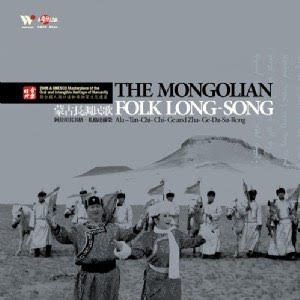
These recordings taught us the beauty of open space and emotional depth. The long song is the soul of our people, and its melodies influenced the way we compose and express feeling.
開放的な空間の美しさと感情の深みを教えてくれた。ロングソングは僕たちの魂であり、そのメロディーは僕たちの作曲や感情表現に影響を与えている。
Classic morin khuur ensemble recordings from the Mongolian State Philharmonic
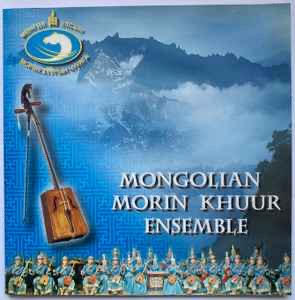
These recordings showed us how powerful and cinematic the morin khuur can be when performed with intention and skill. They helped us understand how tradition can live inside modern compositions.
意図と技巧をもって演奏された馬頭琴がどれほど力強く、映画のような響きを持つかを示してくれた。伝統が現代音楽の中にどのように息づいているかを理解させてくれたね。
Metallica “The Black Album”

This album was one of the first global recordings many of us heard as young musicians. Its simplicity, weight, and emotional directness opened our eyes to what rock music could become.
僕らの多くが若いころ、初めて聴いた世界的な録音の一つだった。そのシンプルさ、重み、そして感情の直接性は、ロック・ミュージックの可能性を僕たちに開いてくれたね。
System of a Down “Toxicity”
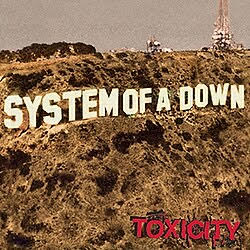
This album taught us that modern rock can carry cultural identity, political thought, and raw emotion all at once. It showed us that powerful music does not have to fit into one shape.
このアルバムは、現代のロックが文化的アイデンティティ、政治的思想、そして生々しい感情を同時に表現できることを教えてくれた。力強い音楽は必ずしも一つの形に収まる必要はないことを教えてくれたんだ。
Mongolian throat singing masters – archive recordings from the Academy of Culture and Art
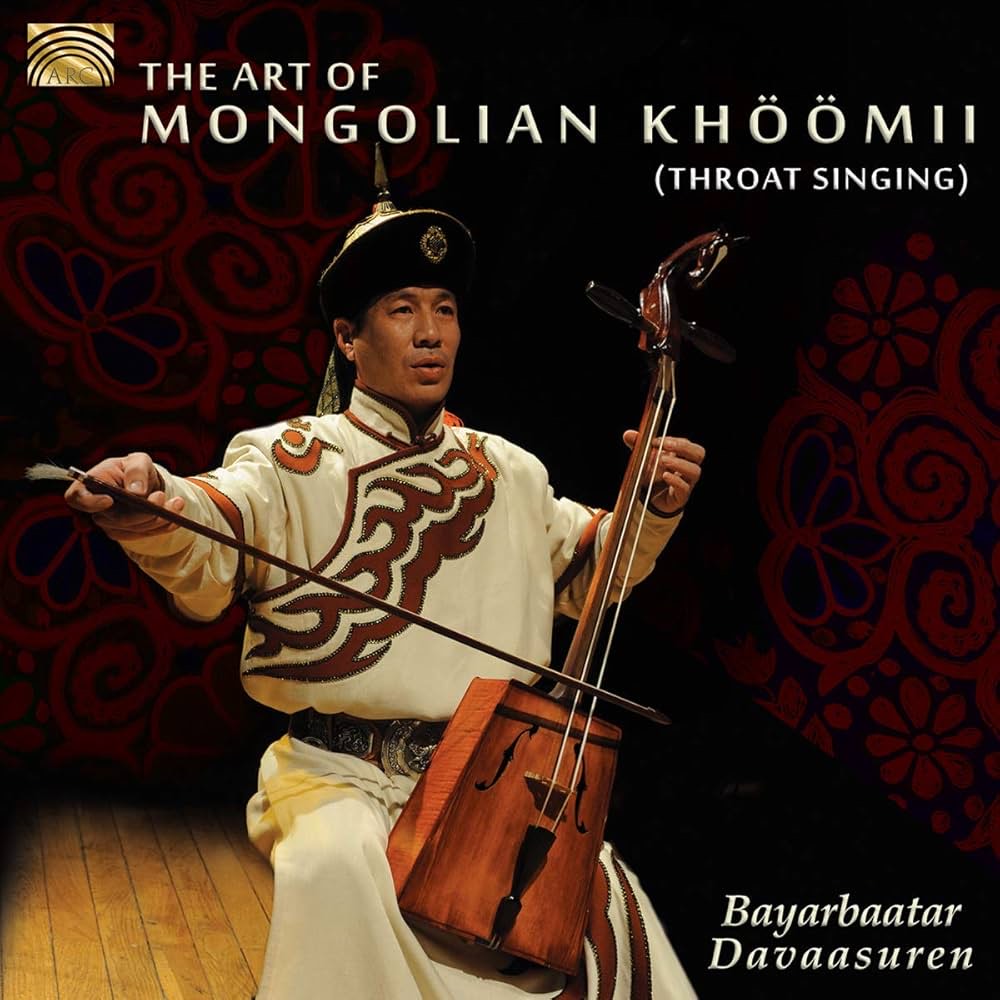
These recordings are not commercial albums, but they changed our lives. Listening to the old masters of throat singing and harkhiraa helped us understand the spiritual and physical discipline behind the technique, and it shaped our identity as musicians.
These albums and recordings influenced us in very different ways, but they all taught us one important lesson.
Music is most powerful when it is honest, fearless, and connected to its roots.
They inspired us to create a sound that carries the strength of the steppe and speaks to the modern world at the same time.
商業的なアルバムではないけど、僕たちの人生を変えた。喉歌とハルキラーの巨匠たちの演奏を聴くことで、その技法の背後にある精神的・肉体的な鍛錬を理解し、音楽家としてのアイデンティティを形作ることができたんだ。
こうした作品は、それぞれ異なる形で僕たちに影響を与えたけど、どれも重要な教訓を与えてくれている。音楽は、誠実で、恐れを知らず、そのルーツと繋がっている時に最も力強いとね。
ステップ文明の力強さと現代社会へのメッセージを同時に伝えるサウンドを生み出すインスピレーションとなったよ。
MESSAGE FOR JAPAN
The connection between Mongolia and Japan has always been strong and respectful. Our two countries share many cultural links, from sumo wrestling to traditional music, and there is a deep sense of mutual admiration. Mongolia has benefited greatly from the kindness of Japanese people and organizations who have supported education, health, infrastructure, and many important projects in our society. Their contributions have touched many lives, and we hold that friendship with sincere gratitude.
As musicians, we have great respect for Japanese culture. Japanese traditional music carries a purity and emotional discipline that feels very close to our own artistic spirit. Instruments such as the shamisen and taiko drums have a spiritual quality that resonates with the sounds of the Mongolian steppe. We also admire Japan’s ability to honor ancient traditions while leading the world in modern creativity, from cinema to design to technology.
Japanese audiences are known for listening with focus and emotion. They approach music with sincerity, and for a band like Uuhai that expresses deep cultural roots and strong emotional themes, that kind of audience connection is very meaningful. Japan is a place where art is treated with respect, and that inspires us.
Message for Japan:
To all our friends in Japan, thank you for your continuous support and kindness toward Mongolia and its people. Your friendship has helped our country grow, and we respect you deeply for your generosity and your cultural richness. We hope to visit Japan soon and bring the voice of the Mongolian steppe to your stage. Until then, please continue protecting your beautiful land, honoring your traditions, and creating art that inspires the world. We look forward to meeting you under one sun and one moon.
Uuhai sends you strength, unity, and respect.
モンゴルと日本の絆は、常に強く、敬意に満ちたものだった。両国は、相撲から伝統音楽まで、多くの文化的繋がりを共有し、深い尊敬の念を抱いている。モンゴルは、教育、医療、インフラ整備、そして社会における多くの重要なプロジェクトを支援してくれた日本の人々や団体の厚意から、多大な恩恵を受けてきたんだ。日本人の貢献は多くの人々の心に響き、僕たちは心からの感謝の念をもって、この友情を育んでいるよ。
そして僕たち音楽家は、日本文化に深い敬意を抱いている。日本の伝統音楽は、僕たちの芸術精神と深く結びつく純粋さと、感情的な規律を備えているよね。三味線や太鼓といった楽器には、モンゴルの草原の音色と共鳴する精神的な響きがある。また、映画からデザイン、テクノロジーに至るまで、現代の創造性において世界をリードしながらも、古代の伝統を重んじる日本の力強さにも感銘を受けているんだ。
日本のオーディエンスは、集中して感情を込めて音楽を聴くことで知られている。彼らは真摯に音楽と向き合っている。深い文化的ルーツと強い感情的なテーマを表現する UUHAI のようなバンドにとって、そうした観客との繋がりは非常に意義深いものだよ。日本は芸術が敬意を持って扱われる国であり、それが僕たちのインスピレーションとなっているんだ。
日本へのメッセージ:
日本の友人のみんなへ。モンゴルへの変わらぬ支援と厚意に感謝を。みんなの友情は僕たちの国の成長を支えてきたんだ。日本の寛大さと豊かな文化に深く敬意を表するよ。近いうちに日本を訪れ、モンゴルの草原の声を日本のステージに届けられることを願っているね。
それまで、美しい国土を守り、伝統を尊重し、世界にインスピレーションを与える芸術を創造し続けてほしい。一つの太陽と一つの月の下でみんなに会えるのを楽しみにしているよ。
UUHAI より、力と団結、そして敬意を。
UUHAI
UUHAI Facebook
日本盤のご購入はこちら。ROCK FOR THE NATIONS