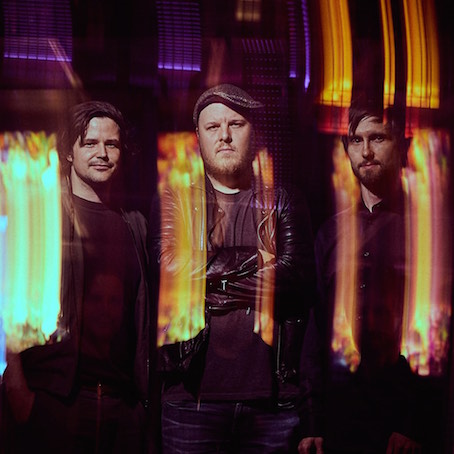
EXCLUSIVE: INTERVIEW WITH SONDRE SKOLLEVOLL OF MORON POLICE !!
“Especially the JRPGs, went on to influence millions of kids, who then, because of the music in these games, had a natural inclination towards progressive rock/metal (and classical too, to an extent). It was basically prog rock/metal, just on a Super Nintendo/Playstation!”
Q1: “A Boat on the Sea” has catapulted Moron Police to big band status. It received rave reviews in many media outlets and won various awards. How did you feel when you saw people like Mike Portnoy raving about that album?
【SONDRE】: A bit surreal, really. I basically grew up listening to the various projects Mike plays in, so to see him like our stuff was wild. I also really like that he uses his fame and platform to highlight lesser known bands. I wish more artists did this. Visibility is probably the most valuable and effective way to get people to give your music a chance, so stuff like that is a big, big help..
Q1: “A Boat on the Sea” は、 MORON POLICE をビッグバンドの地位に押し上げましたね。多くのメディアで絶賛され、様々な賞を受賞しました。
Mike Portnoy のような人たちがアルバムを絶賛しているのを見てどう感じましたか?
Q2: You lost your good friend and drummer Thore Omland Pettersen… I heard that the band itself could have ended, how could you look forward?
【SONDRE】: It’s what he would have wanted. But it wasn’t easy and it’s not easy now.
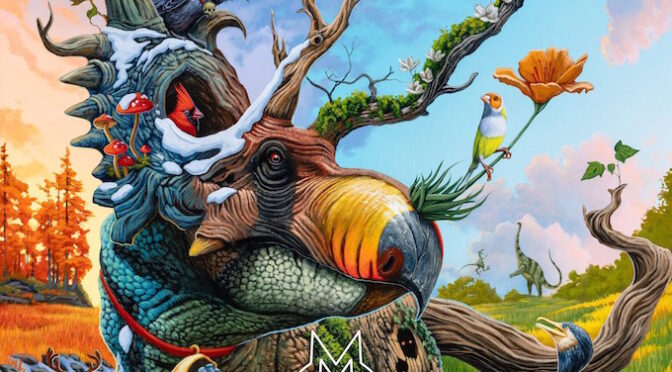
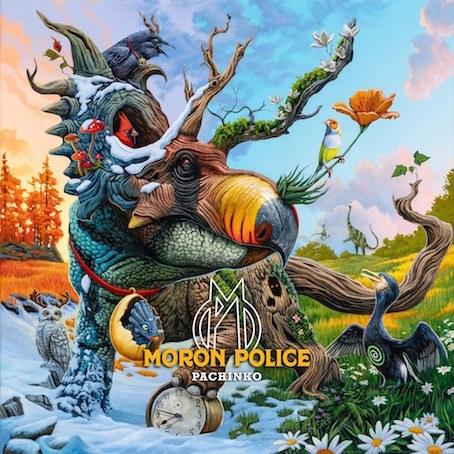
“Pachinko” was already written before he died, he knew the songs, and so we wanted to complete it for his sake as well.
The only thing I’m good at is making music, but without him it will never be the same.
I honestly haven’t made much music since his passing, but I still enjoy playing. More music will come. I consider it honouring his legacy, and honouring what we started way back in 2008. I know he’d be really, really angry with me if I ended Moron Police because of his death.
Q3: I was surprised to see Billy Rymer of The Dillinger Escape Plan on board! His usual musical style is not close to yours. Why did you approach him and how did you get him to join?
【SONDRE】: A happy coincidence, really. At the time, he was living in Mike Watt’s house (the guy who mixed our previous album and Pachinko) and was available for session work. Initially, we were going to try to use many different drummers for the album. Drummers that we know Thore loved. But when Billy said he’d do the entire album, we were very excited. Billy was one of Thore’s absolute favorite drummers. They both share a common ground in punk and hardcore, so while the music of Dillinger Escape Plan and Moron Police is quite different sonically, there’s actually quite a bit of overlap in the styles underneath. Moron Police has always had a punk, or pop punk core. Me and Thore grew up listening to that sort of stuff (and you can hear it pretty clearly on our first album), so while Dillinger is certainly on the extreme side of things, there’s a connection. It felt like the universe was intervening! We are forever grateful for his wonderful contribution to the album.
As for how you get him, or anyone else you want to have play on your music: you pay them!
Q3: Thore の穴を埋めるために、THE DILLINGER ESCAPE PLAN の Billy Rymer が参加しているのには驚きましたよ! 彼の普段の音楽スタイルは、MORON POLICE の音楽スタイルとはあまり似ていませんが、なぜ彼にアプローチし、どうやって起用したのですか?
Q4: I was surprised that the title of your album is “Pachinko”! Why did you choose a Japanese gambling game as the title?
【SONDRE】: Well, it’s a concept album in which a man is turned into a sentient Pachinko machine in a futuristic Tokyo by the devil so…..
It’s also used as a metaphor for a lot of different things in the lyrics. For example, how humans will keep doing the same thing over and over, expecting a different result. Madness, some would call that. Gambling is another word for it. But it has many names.
Q5: That’s not the only title that relates to Japan. You also have “Hanabi” and “Okinawa Sky”. Both are beautiful sights that Japan has to offer, but why did you put so much love for Japan into them?
【SONDRE】: Well, mostly because the story takes us to Japan! And because I’m interested in Japan! My grandparents and uncles lived there for 3 years, I think it was, back in the 80s, and I grew up with different types of cultural exports from your country, so I’ve always had a (healthy) interest in the culture, history and different types of nature there. I’m quite interested in the Ainu people and would really like to visit Hokkaido at some point in my life.
As for “Hanabi,” it’s a reference to Takeshi Kitano’s film of the same name.
Q6: After you released your last album, in the 2020’s the world became a dark place where pandemics, war, oppression, discrimination, and violence were commonplace. That’s why I feel so heartened by your unclouded and beautiful music! Thank you very much! In fact, were you conscious of such a change to a darker world in the making of your the most beautiful work?
【SONDRE】: Thank you! The world seems to get darker and darker for each passing year. It’s also because we have the internet now and social media―we get to see and hear everything now, and we’re forced to relate to it in some way. This can be very, very depressing. But I don’t think that’s the reason why the music I write sounds uplifting, you know, as a sort of counter to that darkness. I don’t think about those things when writing. I just play around with an instrument and songs appear. I’m a bit scared of analyzing it too much, really, in case I lose the ability to write songs! I like to think that there is more good in the world than evil. But evil seems to have a bigger budget.
But I hope our music brings a little more light into this world.
Q7: Many Japanese people feel that while playing pachinko they can forget about the dark world and their unpleasant daily lives. (Of course, they sometimes lose money and time because of it. lol) Your music is similar in a way, and is a great escape for those who are in pain and suffering, would you agree?
【SONDRE】: I normally wouldn’t think about our music in that way. But since the release of “A Boat on the Sea” I’ve received A LOT of messages from people both online and in person saying these kinds of things. I would say I get about one or two messages a week telling me how the music has helped them through some very tough times. They’ll often explain what those tough times are, and I am constantly astonished that our music can have such a profound positive effect on people. It is hard to explain how this makes me feel, but I am very honored to have been a positive influence.
【SONDRE】: 普段は、僕たちの音楽についてそんな風に考えることはない。でも、”A Boat on the Sea” をリリースして以来、オンラインでも直接でも、たくさんの人から同じようなメッセージをもらうようになってね。 週に1通か2通くらいは、僕らの音楽がとてもつらい時期を乗り越えさせてくれたというメッセージをもらうかな。
僕たちの音楽がこれほどまでに、人々にポジティブな影響を与えることができるのかと、いつも驚かされているよ。この気持ちを説明するのは難しいけど、良い影響を与えていることをとても光栄に思っているよ。
Q8: In particular, I felt that the influence of the Seiken Densetsu 2 and Final Fantasy 7 soundtracks was strongly evident in this colorful album. What do you think it is about video game music that resonates with progressive rock and metal?
【SONDRE】: Fun question! And I agree! Well, Hiroki Kikuta was a big fan of Yes (and I think Gentle Giant too), which is very evident in the Seiken Densetsu 2 soundtrack. It’s technical prog rock! Prog also uses a lot of the same elements that classical music does, like overtures and reprises, leitmotifs and complex arrangements. So, there’s a connection between the two. Video game music, especially in the 90s was WILD. There were no rules. These composers could really test the limits of what was possible and were instrumental in elevating video games to a true art form. There’s something magical that happens when you have a story that moves you emotionally coupled with a memorable score that does the same.
Many of these games, especially the JRPGs, went on to influence millions of kids, who then, because of the music in these games, had a natural inclination towards progressive rock/metal (and classical too, to an extent). It was basically prog rock/metal, just on a Super Nintendo/Playstation!
Thank you for listening to our music, first and foremost! It’s weird that a small band from Norway can reach across the globe and find a home on such distant shores.
But what a great example of how the internet can be something that brings us together and not apart! I hope you enjoy this new album and really give it a chance. If you give it time, you will be rewarded. Thank you!
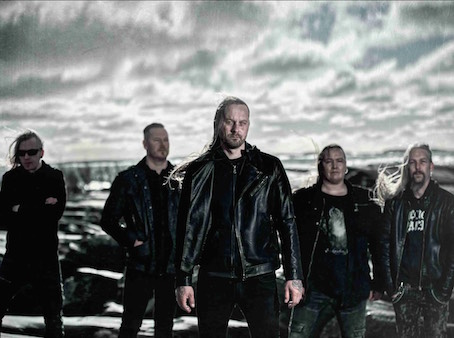
EXCLUSIVE: INTERVIEW WITH VILLE VILJANEN OF MORS PRINCIPIUM EST !!
“When we started, we just wanted to make melodic death metal. We did not want to sound exactly like some other band, so maybe that is one reason. But I guess our songwriters just wanted to write songs the way we have done.”
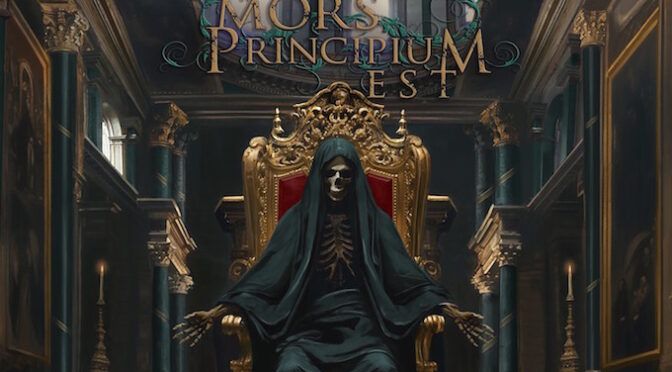
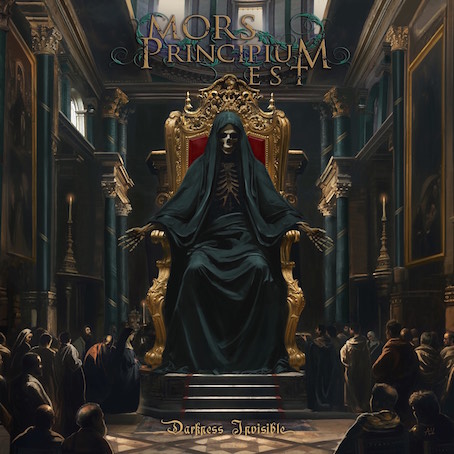
DISC REVIEW “DARKNESS INVISIBLE”
「結成当初は、ただメロディック・デスメタルを作りたかったんだ。ただ、他のバンドと同じようなサウンドにはしたくなかった。それがテクニカルになった理由のひとつかもね。このバンドの歴代のソングライターたちは、そうして僕らがやってきたように、テクニカルな曲を書いていきたかっただけなんだと思う」
メロデス始まりの地、イエテボリから少し離れたフィンランド。彼の地もまた、メロデスを牽引した重要な場所のひとつであるだけでなく、より革命的なメロデスを生み出したと OMNIUM GATHERUM のインタビューにて記しました。AMORPHIS とカレワラの奇跡的な邂逅は、後のフィンランドのメロデス世界に “個性的である” ことを運命づけたとも言えます。CHILDIEN OF BODOM, OMNIUM GATHERUM、そして最近の BRYMIR までフィンランドのメロデスは、それぞれステレオタイプとは異なる並外れた個性を持って戦ってきました。
MORS PRINCIPIUM EST もそんなフィンランドの綺羅星のひとつ。彼らの個性は、激烈なデスメタルに、ハイパー・メロディックでウルトラ・テクニカルな冷気を吹き込むことでした。
「僕にとっては、どのアルバムも特別だよ。 それぞれのアルバムがなければ、僕らはここにいなかったし、”Darkness Invisible” というアルバムもなかっただろうからね。でもそうだね、このアルバムにはファースト・アルバムからの影響もあるけど、新しいアルバムからの影響もあると思う」
古のメタル・ファンにとって、そんなフィンランドの冷気と冷徹の洗礼を存分に浴びたのが、デビュー作 “Inhumanity” であり、名作 “The Unborn”, “Liberation = Termination” だったのです。当時のギター・チームが脱退し、Andy Gillion というメロデス・シュレッド・マシンを得て、MORS PRINCIPIUM EST は荘厳シンフォニックな要素も加えながらさらに飛翔。Gillion を失うも、黄金のギター・チーム、そしてほぼオリジナル・メンバーが復帰して最新作 “Darkness Invisible” が完成を見たのです。そうして、今回のインタビューイ、バンドの首領 Ville Viljanen が語る通り、アルバムは初期と後期の完璧なる融合、MPE 集大成ともいえる傑作に仕上がったのです。
“Of Death” と “Venator”、開幕の二連撃から我々は、Jori Haukio のメカニカルかつ抒情的なシュレッドに “Liberation = Termination” の影を見ます。そうして、牧歌的なインタルードを挟んで押し寄せる、中盤の威風堂々たるドラマティシズムに我々はただ圧倒されるのみ。近年の耽美と荘厳で磨き抜かれた初期の激情と慟哭は、狂おしいまでにフィンランドの風を運び、リスナーに北欧のカタルシスを届けるのです。そう、彼らの個性はもはやフィンランドの秘宝。
今回弊誌では、ボーカリスト Ville Viljanen にインタビューを行うことができました。「メロデスは以前ほど人気がなかったり、他のジャンルほど人気がなかったりするかもしれないのはたしかだ。それでも今でも必要とされているし、求められていると思う。僕たちが演奏を続けているのは、ただメロデスを演奏するのが楽しいからなんだ」 来日も決定!どうぞ!!
MORS PRINCIPIUM EST “DARKNESS INVISIBLE” : 10/10
INTERVIEW WITH VILLE VILJANEN
Q1: You are coming back to Japan for the first time in a long time! First of all, please tell us how you are feeling right now. Is there anywhere you would like to go in Japan?
【VILLE】: Hi. Yeah, we are finally returning to Japan, after 7 years. We are feeling great about it. I have always loved Japan and Japanese people. There are many places I would like to visit in Japan, too many to mention. I am just happy I get to visit Osaka and Tokyo again..
Q2: Japan is one of the most popular melodeath countries in the world, and many great melodeath bands have come out of here. It seems that the love of dark and sad melodies is in common with Scandinavia, would you agree?
Q3: When the history of melodeath began in the early 90’s, there were no amazingly “technical” bands. That is why MPE has become so special. Why did you decide to bring your phenomenal shred and technique to melodeath?
【VILLE】: I really don’t know. When we started, we just wanted to make melodic death metal. We did not want to sound exactly like some other band, so maybe that is one reason. But I guess our songwriters just wanted to write songs the way we have done.
Q4: In this day and age, some people say that melodeath is outdated, rustic, or unpopular. What do you think about those words? Why do you keep playing melodeath?
【VILLE】: Well, it is quite clear, that atleast it is not unpopular, as there are still many people listening to melodeath and buying melodeath albums. If it would be totally unpopular, I don’t think we would be playing in Japan either, or in any other places.
But yes, maybe it is not as popular as it used to be, or not as popular as some other genres, but I think it still is needed and wanted. We keep playing it because we enjoy playing it.
Q5: In recent years, Andy Gillion, who was considered one of the key figures in MPE, left the group and the early golden guitar team of Jori Haukio and Jarkko Kokko returned. How did this major change come about?
【VILLE】: Mr Gillion was in fact a key figure in MPE, during his time. It was time for Mr Gillion to leave and luckily Jori and Jarkko felt like they wanted to return to MPE.
Q5: 近年、MPEの中心人物の一人と目されていた Andy Gillion が脱退し、Jori Haukio と Jarkko Kokko の初期の黄金ギター・チームが戻ってきましたね。この大きな変化はどのようにして起こったんですか?
【VILLE】: Mr. Gillion は実際、MPEの中心人物だったよ。 彼の時代の間はね。Mr. Gillion が去る時が来たけど、幸運にも Jari と Jarkko はMPEに戻りたいと感じていた。だからすべてが上手くいったね。
Q6: So, “Darkness Invisible” is really great album! “Of Death”, “Venator” and “Beyond the Horizon” will remind many people of “Liberation = Termination”! Is that album still special for you?
【VILLE】: Every album is special. Without each album, we would not be here and there would not be “Darkness Invisible” album.
We had to write all the previous albums to be able to write “Darkness Invisible” album. I think it is quite impossible not to write music that would not remind of some other previous albums, especially when the song writer is the same and he is still writing the same genre music..
Q7: However, there are also plenty of symphonic parts on this album, such as “Seven”. Rather than a return to the roots, it seems to me that this album is more like a culmination of MPE, would you agree?
【VILLE】: I think this just was the natural way of continuing and I think Jori just wrote what he felt was right.
But yes, I think this album has influences from the first albums but also influences from the newer albums.
Q8: Mors Principium Est means “Death is just the beginning” in Latin. And the album also opens with the song “Of Death”. In a world where death, violence, and division have become the norm, what can heavy metal do?
【VILLE】: Actually it means, “Death is the beginning”. There is no “just” word in it. 🙂 Heavy metal can still keep going and continue to be heavy metal.
【VILLE】: Mors Principium Est とは、”死は始まり” という意味だ。 そこには “すぎない” という言葉はないよ。ヘヴィ・メタルはこれからもまだ続けることができるし、メタルであり続けることができる。
FIVE ALBUMS THAT CHANGED VILLE’S LIFE!!
Helloween “Keeper of the Seven Keys”
Metallica “Kill ‘em All”
At the Gates “Slaughter of the Soul”
Hypocrisy “Abducted”
Megadeth “Countdown to Extinction”
MESSAGE FOR JAPAN
I do like some Japanese series, like for example “Alice in borderland”. My oldest daughter loves Japanese anime. Finally I hope to see many people at out Japanese shows and lets have a great time together!
“I’ve never had world domination or fame as a goal ― just to write and perform my music, something I’ve lived off solely since I was nineteen, and something I’m incredibly grateful for. The least you can do is hug someone who supports your experimenting and songwriting.”
Anyone who attended FREAK KITCHEN’s first concert in Japan in a long time was surely surprised by the warmth of the venue. At least for me, it was the first time I’d ever experienced a live performance where there was such a clear barrier between the performers and the audience, and even between the audience members themselves. We were made to practice some mysterious Swedish, counted out odd time signatures, and laughed our heads off at Mattias’s comedy routines. The quality of the songs and the virtuosity of the instruments were undeniable, but more than that, it was a concert where I truly felt the joy of direct human connection.
It was an atmosphere born out of the extraordinary guitarist Mattias “IA” Eklundh, who values connections more than anyone else. He appeared in the audience before the show to shake hands with each person, and invited those who purchased his signature guitar to take photos with him. During the show, he livened up the venue with comedy routines and Swedish language lessons, bringing the audience together. In today’s world, where faceless social media interactions and, even more so, one-way “interactions” based on quotes are the norm, Mattias values face-to-face connections more than anyone else. He knows that without fans who engage with, enjoy, and support his unconventional experiments, it’s just “sound,” not music.
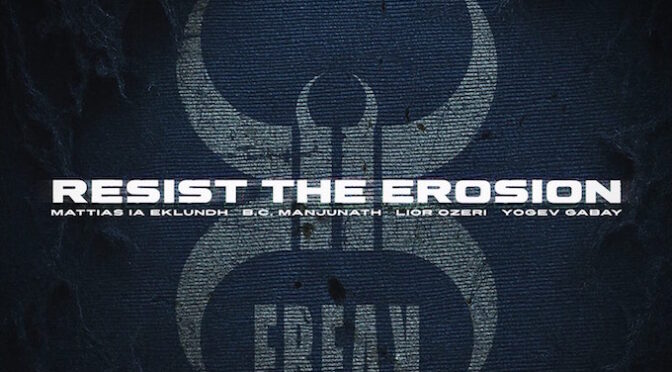
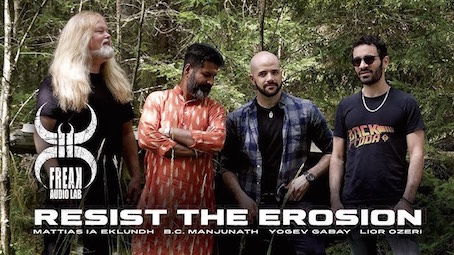
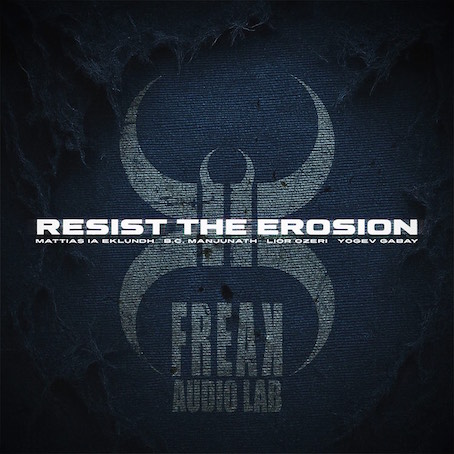
Mattias “IA” Eklundh’s “Freak Audio Lab” experiments are always joyful and filled with gratitude. Even within this lab, “Resist the Erosion” stands out as a monumental achievement.
Mattias’s project was born out of his admiration for Indian music, particularly the South Indian Carnatic music known as Konakkol. Konakkol is an art of vocally playing percussion syllables with highly intricate rhythms and signatures based on complex mathematical formulas. B.C. Manjunath has become a key advocate for this traditional Indian musical philosophy, incorporating it into the worlds of jazz and world music. That’s why Mattias, a lover of Carnatic music, was so thrilled when Manjunath contacted him about a collaboration that would fuse modern metal with ancient South Indian musical styles. Mattias’s laboratory, now a quartet of veteran musicians with bassist Lior Ozeri and drummer/percussionist Yogev Gabay, has produced 10 astounding tracks that sound like John McLaughlin had formed a whole new SHAKTI. When the Fibonacci-esque intricacies of the konakkol and mridangam meet Mattias’s djenty, eight-string modern metal universe, metal and guitar music are transported to another dimension. True innovation truly comes from pure passion and curiosity. 115/16, 34/4. Though colored by incredibly complex time signatures and instrumental counterpoint, there’s a swirl of stunning emotion and dense melody unfolding here. That’s what makes “Resist the Erosion” such an unprecedented landscape, and why Mattias “IA” Eklundh is a lifelong guitar scientist.
This time, we had the pleasure of interviewing Mattias “IA” Eklundh. This is his fourth appearance. Enjoy!!
FREAK AUDIO LAB “RESIST THE EROSION” : 10/10
INTERVIEW WITH MATTIAS “IA” EKLUNDH
Q1: First of all, could you tell us about your impression of your first tour in Japan in a really long time? What is Japan to you?
【MATTIAS】: Japan has always been close to my heart ever since my first visit in 1996 when we released Spanking Hour. It’s always a joy to come to your fantastic country, meet all the friends and listeners who have followed us through the years.
It was incredibly fun to play in Osaka and Tokyo again! The warmth from the audience was wonderful, and it really felt like we created a connection between the crowd and the band. The band and I hope to come back soon. A huge thank you to Keiichi Ishida and his team who dared to go against all the skeptical promoters and made our return happen completely on their own. There’s an enormous amount of work behind it, and for that, I am eternally grateful. Keiichi is also my collaborator, together with Harry’s Engineering, where we build Japanese guitars and the Puppy distortion pedal ― a company we call Freak Guitar Lab Japan.
Q2: So, it was really great show! There is no other place where there are no barriers between the performers and the audience as in FREAK KITCHEN’s live performances, which are warm, fun, and always bring smiles to the audience’s faces! What do you keep in mind when you perform live?
【MATTIAS】: We don’t think too much or plan things in advance. Christer, Björn, and I just go for it. No one pretends to be someone they’re not. If we mess up or make a mistake, we laugh heartily about it. We’re human just like everyone else, and the moment you let your guard down and allow yourself to make mistakes, all barriers between the band and the audience disappear. We absolutely loved everyone in both Osaka and Tokyo. An incredible response. A big thank you if you were there and are reading this.
Q3: How did you feel about the Japanese bands Rikugo and Ulma Sound Junction? Both of them have mentioned you as an influence and inspiration.
【MATTIAS】: Both bands were surprisingly good and very, very pleasant and easy to work with. Really great bands, and both delivered rock-solid performances, which made us even more fired up to do a great job when it was our turn.
Q4: So, tell us about the wonderful “Resist the Erosion”. First of all, what is Freak Audio Lab? Is it your solo project?
【MATTIAS】: Freak Audio Lab can be my solo project, a band, or whatever I want it to be, actually. The music I write gets to decide. In the case of the new album *Resist The Erosion*, it’s a band ― not a project ― with my absolutely incredible friends B.C. Manjunath, Yogev Gabay, and Lior Ozeri, who elevate my music in a remarkable way. I’m very proud and grateful that they want to work with me and that they’ve really put in the effort to do an amazing job. The album will always be a highlight in my artistic life. Hopefully, we’ll also be able to tour together and make more music in the future.
Q4: では、素晴らしき “Resist the Erosion” について話しましょう。まず、”Freak Audio Lab” とは何ですか?あなたのソロ・プロジェクトなんですか?
Q5: Still, I think “Resist the Erosion” is the best guitar album of the 21st century! Why did you feature Karnataka music, Konakkol and mridangam throughout your work?
【MATTIAS】: Thank you so much for your kind words. I don’t actually see the album as solely a guitar record ― if I did, I probably would’ve called it *Freak Guitar* something instead. It’s a record with an unorthodox combination of people and instruments. As you probably know, I have a weakness for Indian music, especially Carnatic, and getting to work with a legend like Manjunath is almost unbelievable. He’s simply the best in his field. The same goes for Yogev and Lior.
For me, music is very little about genre. I don’t care at all about what “goes together.” Sure, I play metal guitar with distortion and eight strings. But I enjoy working with synths or traditional or exotic instruments like the mridangam just as much. In the end, it’s just music ― the way I hear it.
Q5: “Resist the Erosion” は21世紀最高のギター・アルバムだと思いますよ!まず、なぜ作品全体にカルナータカ音楽、コナッコル、ムリダンガムを取り入れたのですか?
Q6: Why do you think Karnataka music, and more specifically Japanese and other ethnic music from around the world, harmonize so well with metal and electric guitar?
【MATTIAS】: Hard to say. There’s quite a lot of work behind creating a sound and flow where everything has its given place without disappearing. The mridangam is like an entire drum kit in itself and requires some effort to find its place next to Yogev’s kit ― we used over 25 channels to capture all the ambience and milk the whole setup. But in the end, it’s really cool when it all comes together and becomes one unit. Yogev and Manjunath also worked a lot together to not get in each other’s way. Lior is simply outstanding in his approach, and my smile was always ear-to-ear when I received everyone’s takes to work with in my studio.
Q7: Karnataka music is known as the most mathematically “rigorous” music in the world, and 115/16 is not something that an average person can count on! haha! Even in such a situation, Konakkol and your guitars often cross each other and play in unison. Do these miracles happen spontaneously?
【MATTIAS】: A lot of it is built on traditional Indian rhythms that I compose, arrange, and record. There’s no random factor involved. Everything is carefully constructed. Then I let it stay alive and didn’t edit or polish it (sometimes that’s needed, but not on *Resist The Erosion*). Both Manjunath and Yogev sent different rhythmic, Carnatic structures as possible inspiration when I started the pre-production, and many of their ideas I’ve woven into the music.
【MATTIAS】: 作品の多くは、私が作曲、編曲、そして演奏する伝統的なインドのリズムに基づいているんだ。そしてレコーディングされる。偶然の要素は一切ないんだよ。全てを丁寧に構築している。そして、そのままの状態を生かし、編集や磨きをかけたりはしなかったんだ。時には編集も必要だけど、”Resist The Erosion” ではそうではなかったからね。
プリ・プロダクションを始めた頃、Manjunath と Yogev はそれぞれ異なるリズムやカルナータカ様式をインスピレーションとして送ってくれ、彼らのアイデアの多くを音楽に織り込んでいるよ。
Q8: You previously released a song called “Kintsugi,” and this time it is “Nekojita”. We are very happy that you chose a Japanese word for the title, but why did you choose such a word?
【MATTIAS】: Haha, I don’t really know. I think the idea behind Kintsugi is beautiful ― to celebrate the imperfect and make it even more beautiful. I actually think I got the idea while watching an episode of *Ted Lasso* on AppleTV+. Beautiful word, beautiful thought.
Nekojita has always been a favorite word because I myself am a bit of a wimp when it comes to food and drinks that are too hot. There’s something powerful about the Japanese language that’s also percussive. There will probably be more Japanese titles in the future.
Q9: The title “Resist the Erosion” seems to me to be a message about resisting the erosion from the “darkness” of today’s instant culture, division, slander, and oppression, how about that?
【MATTIAS】: Above all, it’s about not stagnating, about exploring new ground. Of course, we live in a strange time, especially with the total daily information bombardment that leaves you not knowing whether you’re coming or going. The best thing, for me, is to ignore it and shape my life the way I want it ― with what’s good for me: my family, music, nature, and the freedom to create without preconditions.
Q9: “Resist the Erosion” “侵食に抵抗する” というタイトルは、現代のインスタントな文化、分断、誹謗中傷、抑圧といった “闇” による侵食に抵抗するというメッセージのように思えます。
Q10: Lastly, I feel that you value the actual “connection” between people very much. For example, you walk around the venue before a concert to interact with fans, take pictures with each person who buys your guitar to express your appreciation, and so on. Such “connections” that transcend country, language, race, and religion are very important in times like these, would you agree?
【MATTIAS】: Absolutely. I do what feels natural, and I love meeting people who enjoy my craziness. Deep down, we’re all the same. Many times, I’ve elbowed my way out after performances, against the organizers’ reluctance, just to chat for a while with wonderful listeners. Who am I without them? My music would live in a vacuum if no one listened. I’ve never had world domination or fame as a goal ― just to write and perform my music, something I’ve lived off solely since I was nineteen, and something I’m incredibly grateful for. The least you can do is hug someone who supports your experimenting and songwriting.
EXCLUSIVE: INTERVIEW WITH MARKUS VANHALA OF OMNIUM GATHERUM !!
“I actually have Alexis old Chevy Monte Carlo SS as his sister wanted me to get it after Alexi passed away. I’ve been cherishing and building it to the max, and Alexi would really respect in what shape and supercharged and LOUD the car is nowadays. It’s fun!”
DISC REVIEW “MAY THE BRIDGES WE BURN LIGHT THE WAY”
「実は今、Alexi の古いシボレー・モンテカルロSSを所有しているんだ。Alexi が亡くなった後、彼の姉が私に譲りたいと言ってくれたんだ。これまで大切にして、最大限に磨き上げてきたんだ。今のこのマシンの出来栄え、スーパーチャージャー、そして大音量を、Alexi もきっとリスペクトしてくれると思う。楽しいよ!」
スウェーデンのイエテボリで生を受けたメロディック・デスメタル。しかし、その発展は決してスウェーデンとイエテボリだけが担ってきたわけではありません。特に、フィンランドとメロデスの蜜月はあまりにも濃密で、同時に革命的でもありました。英雄 AMORPHIS のカレワラに端を発したフィンランドのメロデスは、MORS PRINCIPIUM EST の常軌を逸したシュレッドや、INSOMNIUM の映画のような風景で常にその領域を拡大し続けています。
そんなフィンランドの創造的なメロデス、その両輪として牽引し続けたのが CHILDIEN OF BODOM と OMNIUM GATHERUM だったのです。そして、Alexi Laiho の悲劇的な死から5年。OMNIUM GATHERUM, INSOMNIUM, CEMETERY SKYLINE でギターを紡ぐ Markus Vanhala は Alexi の愛車と遺志を今日も守り続けています。
「僕は Mutt Lange と DEF LEPPARD の大ファンなんだ。実は前作の “Origin” の時、メロデスの “Hysteria” バージョンを作ろうと思ったって冗談を言ったくらいでね。だから、80年代のロック用語で僕らの音楽を “アダルト・オリエンテッド・デスメタル” と呼ぶんだよ。これはデスメタルのアリーナ・ロックを目指す “AORデスメタル” みたいなもの。ステレオタイプ的には “メロデス” というジャンルは狭すぎるように思えるかもしれないけど、僕は固定観念にとらわれずに考えるようにしているからね」
Markus が居城 OMNIUM GATHERUM で目指す革命は AOD。アダルト・オリエンテッド・デスメタルの構築です。そして実際、”May The Bridges We Burn Light The Way” には、DEF LEPPARD が “Hysteria” で成し遂げた透明で奥深くもキャッチーなアリーナ・サウンド、DOKKEN が誇ったカミソリのようなギター・リード、EUROPE のカラフルでゴージャスな哀愁がたしかに存在しています。
なにより重要なのは、前作 “Origin” ではそうした “80、90年代のAORサウンド” を加えることで減退したかのように感じられたメロデスの源衝動、慟哭が今作においてはいささかも失われてはいないことでしょう。いや、むしろシームレスに洗練されたノスタルジアを注ぐことで、OMNIUM GATHERUM が創造してきたメロデスの輪郭がより鮮やかに、色味を増して新鮮に感じられるのです。
「実はメロディック・デスメタルという言葉ももう好きじゃないんだよね。でも、ジャンル名が必要なのは理解している。僕は OMNIUM GATHERUM の音楽をただ “ヘヴィ・メタル”と呼ぶのが好きでね。それが僕らの音楽だから。Bjorn Strid は僕と音楽への愛がすごく似ているんだ。デスメタルからAOR、そしてその間の音楽まで、僕らの音楽の幅広さには音楽的に深い繋がりを感じていてね。だから、彼と一緒に仕事をするのはすごく楽しかったんだ」
だからこそ、SOILWORK の誰あろう Bjorn Strid をこの作品のプロデュースを手掛けたのはまさに天啓でした。70年代のプログレッシブ、80年代のAOR、そして90年代のメロデスをこよなく愛し、近年の SOILWORK 及び NIGHT FLIGHT ORCHESTRA でその素養を遺憾なく発揮している Bjorn と組むことで、Markus の楽曲は例えば “My Pain” の近未来的スリルや “Last Hero” のアリーナ・メタル的威風堂々、そして “The Darkest City” のメロデスとプログの夢幻回廊まで、その陶酔感の螺旋はより克明に描き出されることとなりました。メロデスの守護者でありながら開拓者でもあり続ける OMNIUM GATHERUM こそ、フィニッシュ・メタルの王に違いありません。
今回弊誌では、Markus Vanhala にインタビューを行うことができました。「僕が持っているのは、国際ビジネスと物流学なんだよ。友達にいつも笑われるんだけどね。学位に関係する仕事なんて一つもしてないって言われて(笑)。でも、僕はいつも “本当にそうかな?” って聞いてるんだよ。だって、このレベルのバンドはみんな会社を経営しているからね。僕もこのバンドの会社に深く関わっていて、基本的に必要なのは国際ビジネスと物流学だよね?だから、会社経営のコツやちょっとした落とし穴を知るのに役立ってるんだよね」 どうぞ!!
OMNIUM GATHERUM “MAY THE BRIDGES WE BURN LIGHT THE WAY” : 10/10
INTERVIEW WITH MARKUS VANHALA
Q1: Few people in the metal world are as talented and busy as you are! I loved Manitou and Wolftrap, but now you are working with Omnium Gatherum, Insomnium, and Cemetery Skyline, right? How do you separate each of them musically?
【MARKUS】: Arigato from your nice words! I’ve always been a busy bee and operating on different bands simultaneously since I started playing, maybe it’s some musical ADHD or maybe I got bored on doing just only own thing. Awesome that you remembered my old bands like progmetal Manitou and even hard rocking Wolftrap, you’ve been digging deeper. As of today, I play in OG, Insomnium, Cemetery Skyline and I Am The Night. In my own head these bands are completely different sides of my musical adventures, so it’s pretty clear to me what riff and melody goes to what band. Actually I was already really busy with OG and Inso, but during pandemic era I was bored and just had to write music all the time to keep my sanity together, so that’s how the friend gathering bands CemSky and IATN came together and I’m really happy they did.
【MARKUS】: 素敵な言葉をありがとう!僕は演奏を始めた頃からずっと忙しくて、複数のバンドを同時進行で活動してきたんだ。音楽的なADHDなのか、自分のことだけをやるのに飽きてしまったのかもしれないね。プログ・メタルの MANITOU やハードロックの WOLFTRAP といった昔のバンドを覚えていてくれて嬉しいよ。より深く掘り下げてきれているね。
現在、僕は OMNIUM GATHERUM, INSOMNIUM, CEMETERY SKYLINE, そしてI AM THE NIGHT で演奏しているんだ。僕にとってこれらのバンドは、自分の音楽的冒険における全く異なる側面なので、どのリフやメロディーがどのバンドに合うかは明確に分かっているんだよね。実は、OMNIUM GATHERUM と INSOMNIUM ですでにかなり忙しかったんだけど、パンデミックの時期は暇で、正気を保つためにずっと曲作りに励まなければならなかったんだ。それで友達を集めてバンドを組むことになったんだよね。彼らとやれて本当に嬉しいよ。
Q2: With such a busy schedule, I am surprised that you have a bachelor’s degree in business administration! Does business administration actually help you to live in the metal world?
【MARKUS】: Yeah, I read that bachelor degree ages ago when I wasn’t that busy yet on touring et all. My degree is actually international business and logistics, and my friends are always laughing to me that I haven’t done a day work that relates to my degree, and I always ask them really? Because all bands have own companies to run behind them on this level, which I am highly involved and it’s basically just international business and logistics, right? So it does help on some business tricks and traps as running a company. I almost got finished another degree too, that was culture producer but after two years of studying that I was just way too busy with all my music adventures to get this done.
Q3: Members and former members of Insomnium have studied chemistry or biology in college or are doctors. In a world where you can no longer make money from music, is it important to diversify and diversify your sources of income?
【MARKUS】: Well, I think all of us got the degrees when we really thought we can live thru music, which we happily have actually during over the past 10 years already or so. So that’s actually possible even todays music world, if you do your stuff right and keep yourself busy.
Q4: “May The Bridges We Burn Light The Way” is a really great album! Your music and guitars are very sophisticated and urban, as is the case with Insomnium and Cemetery Skyline. Sometimes people say that melo-death is outdated or rustic, but your music is just the opposite, would you agree?
【MARKUS】: Thanks, I try to get my ingredients outside the ”melodeath field” to keep it interesting and I try to keep my par high to not get boring player or songwriter. I try to stay away on easy solutions in music that sounds they’ve been done many times before, and those riffs belong to my trash bin on my studio computer hehe. My biggest musical loves are 90’s death metal, 80’s hard rock and 70’s heavy and progressive rock. I’m always and eternally too searching new sounds and equipment and I am guitar gear nerd and my collection of guitars, amps and pedals start to be quite wide, so there’s a lot to adventure with my music. For OG my view have always been melodeath with 80’s rock twist and guitar heroism between the lines, and somehow cinematic melodies and soundscapes with song structures. I pretty much see my songs and music many times as landscapes or movie scenes, so I kind of ”see my music”, and when they tell a complete story then I know I am on the right path.
Q4: それにしても、”May The Bridges We Burn Light The Way” は本当に素晴らしいアルバムですね!
INSOMNIUM や CEMETERY SKYLINE でもそうですが、あなたの音楽やギターは洗練されていて都会的です。メロデスは時代遅れだとか、田舎臭いと言う人もいますが、あなたの音楽はそうした評判とは正反対だと思いますよ。
Q5: When I heard this album, the first thing I remembered was Def Leppard’s “Hysteria”. It’s strange to say this about a melo-death band, but the beautiful production, guitar sounds, and arena rock sophistication that Mutt Lange seems to do. This wonderful nostalgia felt very fresh when it met Melo-death! That’s why it makes sense that Bjorn of Soilwork, who loves AOR, is producing it. In fact, is one of your goals to expand the narrow confines of Melo-death?
【MARKUS】: Nice you spotted this, as I am huge Mutt Lange and Def Leppard fan. Actually with the previous ”Origin” album, I joked that we tried to do ”Hysteria” version of melodeath. That’s why we in 80’s rock terms call our music ”adult oriented death metal” – that’s like AOR-death metal which aims like arena rock death metal. I agree that stereotypically ”melodeath” field seems quite narrow, but I try to think outside the box. I actually don’t like the term melodic death metal anymore, but I understand the genre titles are needed to give some explanations to people. I like to call OG’s music ”heavy metal”, as that’s what we are. Björn Strid really shares the similar love for music than I do, so our range from death metal to AOR and between felt like a deeper connection in music, so he was naturally great to work with him on vocal production.
【MARKUS】: 気づいてくれて嬉しいよ。僕は Matt Lang と DEF LEPPARD の大ファンなんだ。実は前作の “Origin” の時、メロデスの “Hysteria” バージョンを作ろうと思ったって冗談を言ったくらいでね。だから、80年代のロック用語で僕らの音楽を “アダルト・オリエンテッド・デスメタル” と呼ぶんだよ。これはデスメタルのアリーナ・ロックを目指す “AORデスメタル” みたいなもの。ステレオタイプ的には “メロデス” というジャンルは狭すぎるように思えるかもしれないけど、僕は固定観念にとらわれずに考えるようにしているからね。
実はメロディック・デスメタルという言葉ももう好きじゃないんだよね。でも、ジャンル名が必要なのは理解している。僕は OMNIUM GATHERUM の音楽をただ “ヘヴィ・メタル”と呼ぶのが好きでね。それが僕らの音楽だから。Bjorn Strid は僕と音楽への愛がすごく似ているんだ。デスメタルからAOR、そしてその間の音楽まで、僕らの音楽の幅広さには音楽的に深い繋がりを感じていてね。だから、彼と一緒に仕事をするのはすごく楽しかったんだ。だから、ヴォーカル・プロダクションで彼と仕事をするのは当然素晴らしいことだったよ。
Q6: In terms of changing melo-death, so did Children of Bodom, also from Finland, with its power metal, classical shred, and 80s sounds. Alexi Laiho has been gone for 5 years now, what was he and his music like for you?
【MARKUS】: Of course Alexi was huge inspiration and genre inventing genius for metal and for Finnish music export, and as also a great dude and a character. When ”Something Wild” came out in 90’s it changed everything, it was really my cup of tea as it included death metal and guitar virtuosity of the 80’s, so my big loves and connected with turbo boosted songs. We toured together few times, and always liked to speak about music and US muscle cars, as we both liked them. Now I actually have Alexis old Chevy Monte Carlo SS as his sister wanted me to get it after Alexi passed away. I’ve been cherishing and building it to the max, and Alexi would really respect in what shape and supercharged and LOUD the car is nowadays. It’s fun!
Q6: メロデスを変えたという意味では、同じフィンランド出身の CHILDREN OF BODOM もパワー・メタル、クラシカルなシュレッド、そして80年代サウンドでメロデスに大きな影響を与えました。
Alexi Laiho が亡くなって5年になりますが、彼と彼の音楽はあなたにとってどのような存在でしたか?
Q7: People like you and CoB are heroes for breaking down barriers, but you must have had your share of criticism from the “gatekeepers of melo-death”. The title “May The Bridges We Burn Light The Way” and the album itself show your determination not to be swayed by such criticisms, would you agree?
【MARKUS】: Yeah, the title says it all – you cannot please every one and don’t let it stop you. Like Lemme said, ”don’t let the bastards bring you down” so this title is kind of like a synonym for that phrase. I’ve noticed many times that OG annoys that kind of ”musical gatekeepers” or ”genre polices”, like we’re too light for death metal but too brutal for heavy metal, but I could not care less and I just wanna do my own thing. Happily we’ve found a steady OG army to follow our band and style and people know what to expect from us.
Q7: あなたやCoBのような人たちは壁を打ち破るヒーローですが、”メロデスの門番” たちから批判も受けてきたでしょうね。 “May The Bridges We Burn Light The Way” “ニ度と戻らないと燃やした後ろの橋が、先行く道を明るく照らすように” (ビバリーヒルズ青春白書: ディラン・マッケイの有名なセリフ)というタイトルやアルバム自体が、そうした批判に動じないというあなたの決意を表していると感じました。
【MARKUS】: そうだね、タイトルが全てを物語っているよ。すべての人を満足させることはできないけど、同調圧力に屈してはいけない。Lemmy が言ったように、”ろくでなしどもに負けるな”。だからこのタイトルは、ある意味その言葉の同義語みたいなものなんだよ。
OMNIUM GATHERUM が “音楽の門番” や “ジャンルの規制” みたいなものに苛立たしい思いをすることは何度もあったよ。例えば、デスメタルには軽すぎるけどヘヴィ・メタルにはブルータルすぎるとか。でも、僕はそんなことは気にしない。自分のやりたいことをやりたいだけなんだ。ありがたいことに、今では僕たちのバンドとスタイルを応援してくれるOGの安定したファン層ができて、みんな僕たちに何を期待していいか分かってくれている。
Q8: Tomas Lindberg’s death had a huge impact on the scene, what was the 90’s and the Gosenburg scene like for you?
【MARKUS】: Early 90’s and Swedish death metal in general, and Gothenburg scene was important for OG when we started this band. As also Finnish scene with bands like Sentenced, Amorphis, Stratovarius that showed to us lil’ boys that you can make international success out of our small country barriers. At The Gates and Tompa were one of the most important influences with his unique voice and ”Slaughter OF The Soul” album, alongside ”Subterranean” of In Flames, ”Gallery” of Dark Tranquillity and ”Crimson” of Edge OF Sanity. Those were super-interesting times to find these new bands and suck the influences out of these bands to our own new thing.. I was just in Brazil with Cemetery Skyline on tour, when we got the news from Tompas death and it hit us really hard, especially as CemSky band members Mikael Stanne and Victor Brandt were his really close friends. So we respected him on a silent moment on stage and his picture on the screen during the show.
Q8: Tomas Lindberg の死はシーンに大きな衝撃を与えました。90年代とイエテボリのシーンはあなたにとってどんな存在でしたか?
【MARKUS】: 90年代初頭、スウェーデンのデスメタル全般、そしてイエテボリのシーンは、僕たちがバンドを始めた頃の OMNIUM GATHERUM にとって重要だった。同時に SENTENCED, AMORPHIS, STRATOVARIUS といったバンドが活躍したフィンランドのシーンも、若い僕たちに、小さな国という壁を乗り越えて国際的な成功を収められることを教えてくれたんだ。
AT THE GATES と Tompa は、その独特な声とアルバム “Slaughter OF The Soul” で、IN FLAMES の “Subterranean”、DARK TRANQUILLITY の “Gallery”、EDGE OF SANITY の “Crimson” と並んで、最も大きな影響を与えたバンドの一つとなったね。当時は新しいバンドを発掘し、そこから自分たちの新しい音楽に取り入れていくという、とても興味深い時期だった。
ちょうど CEMETERY SKYLINE のツアーでブラジルにいた時に Tompa の訃報を聞き、僕たちは本当にショックを受けたんだ。特に CEMETERY SKYLINE のメンバーである Mikael Stanne と Victor Brandt は親友だったからね。だから、ステージ上で沈黙を守り、ショーの間にスクリーンに映し出された彼の写真を通して、僕たちは彼に敬意を表したんだ。
FIVE ALBUMS THAT CHANGED MARKUS’S LIFE !!
Europe “Final Countdown”
That was my first love when I saw that as a 5 year old kid from TV and I immediately insisted my parents to get it for me and I listened this 10 times a day back then and it shaped my future with rock and metal!
This was the testimony for me after Europe that I’ve found the right path to follow and it was something out of this world on this album. Adrian Smith and his guitar solo on ”Stranger in a Strange Land” opened my eyes that I wanna play guitar.
EUROPE の後、自分が進むべき正しい道を見つけたという証となった。このアルバムにはこの世のものとは思えないほど素晴らしい音楽があった。Adrian Smith と彼の “Stranger in a Strange Land” でのギターソロは、ギターを弾きたいと強く思わせてくれたんだ。
Ozzy Osbourne & Randy Rhoads ”Tribute”
This was my deeper book and bible for guitar playing and showed me how to execute it all. This album got me rehearsing and playing guitar all the time in my parents basement. ”Mr Crowley” was the solo that I got fixation to execute that I HAVE TO LEARN THIS. It took hours, days, months, but then I did it. Around 13 years old.
For all mid 90’s metal albums I think this was the last rite that we had to form Omnium Gatherum with my buddies, as this album connected Iron Maiden and death metal, my two main loves back then (*another album I have to mention for this OG beginning was ”Symbolic” by Death which was as important as this IF album!)
90年代中盤のメタル・アルバムの中で、これは仲間たちとOMNIUM GATHERUM を結成するための最後の儀式だった。このアルバムは、当時僕が最も愛していた IRON MAIDEN とデスメタルを繋ぐものだったからね。(OMNIUM GATHERUM の始まりとして、DEATH の “Symbolic” も忘れてはいけないね。これもこのアルバムと同じくらい重要なアルバムだ!)。
Type O Negative ”October Rust”
That was my pathway to gothic music and back to more melodic music after my death and black metal years in later 90’s. ”Love You To Death” was also my wedding song – so it totally changed my life again way afterwards!
ゴシック・ミュージックへの道、そして90年代後半のデスやブラック・メタル時代を経て、僕がよりメロディックな音楽へと回帰するきっかけとなった。”Love You To Death” は僕の結婚式のテーマソングでもあった。つまり、その後ずっと僕の人生を変えたんだ!
MESSAGE FOR JAPAN
Oh yes, I love Japan and Japanese culture especially as it’s so different than our own. My all-time Japanese favorites are of course your food (I am a great sushi cook and do it all the time at my home!), Hayao Miyazaki anime movies, Loudness’ music from the 80’s and Japanese martial arts – when I was a teenager i was active in Shukokai karate and I loved it. Our shows always in Japan are really special warm moments for me, and i cherish them in my heart and hopefully we’ll be back asap there with our new album tour! See ya!
EXCLUSIVE: INTERVIEW WITH NICKLAS SONNE OF DEFECTO !!
“Melody is what makes it human. You can feel aggression and emotion through growls and screams, but clean vocals bring vulnerability – and that’s powerful.”
Q1: First of all, what kind of music did you grow up listening to?
【NICKLAS】: I grew up surrounded by all kinds of music – everything from classical to pop and heavy metal. But the moment I discovered bands like Metallica, Judas Priest, Alice Cooper, and later Symphony X and Dream Theater, something clicked. I was drawn to powerful melodies, big emotions, and the kind of musicianship that told a story without words. That combination of raw energy and deep feeling is what shaped me the most.
Q1: 本誌初登場です!まずは、あなたの音楽的なバックグラウンドからお話ししていただけますか?
【NICKLAS】: クラシックからポップス、メタルまで、あらゆる種類の音楽に囲まれて育ったんだ。でも、METALLICA, JUDAS PRIEST, Alice Cooper、そして後に SYMPHONY X や DREAM THEATER といったバンドを発見した瞬間、何かがカチッとはまったんだよね。力強いメロディー、大きな感情、そして言葉を使わずに物語を語るような音楽性に惹かれたんだ。そのむき出しのエネルギーと深い感情の組み合わせこそが、僕を形成した最大の要因となったね。
Q2: Your technique and singing skills are among the best in the metal world, how did you acquire them? Who were your heroes back then?
【NICKLAS】: Thank you so much! That really means a lot. I’ve always been obsessed with learning and improving – not just as a singer or guitarist, but as a musician overall. I started playing guitar when I was around 11, and I spent countless hours every day practicing, recording, and studying my favorite artists. I started singing when I was 18, not until then did I dare venture towards that. For me, singing has always been very personal and “naked”, and it took me a great deal of courage to start trying to sing and record my own voice.
Some of my biggest heroes were and are Russell Allen, James Hetfield and Dio. Each of them had something unique – power, emotion, or theatricality – and I tried to learn a little from all of them while finding my own sound. I have always been inspired by musical singers and opera singers too – amazing the ability they have to tell a story with their voice.
【NICKLAS】: 本当にありがとう!とても嬉しいよ。僕は常に学び、向上することに夢中だったんだ。シンガーやギタリストとしてだけでなく、ミュージシャンとしてね。僕は11歳くらいからギターを始め、毎日何時間もかけて練習し、レコーディングし、好きなアーティストを研究していたんだ。18歳で歌い始めたけど、その時になって初めて、歌に挑戦する勇気が出たんだよ。僕にとって、歌うことは常にとても個人的で “裸” なものであり、自分の声で歌い、レコーディングを始めるのには、かなりの勇気が必要だったからね。
僕のヒーローの中には、Russell Allen, James Hetfield, Dio がいる。彼らは皆、力強さ、感情、演劇性など、何か独特なものを持っていたからね。僕は自分自身のサウンドを見つけながら、彼ら全員から少しずつ学ぼうとしていったんだ。ミュージカル歌手やオペラ歌手からも常にインスピレーションを受けてきたよ。彼らが声で物語を伝える能力には驚かされるばかりだ。
Q3: Speaking of Denmark, there are many great bands, though not many, such as King Diamond, Mnemic, Dizzy Mizz Lizzy, Volbeat, and Vola. How do you draw inspiration from these predecessors and the scene?
【NICKLAS】: Denmark has a small but very passionate scene, and I think that’s part of what makes it special. Bands like King Diamond and Dizzy Mizz Lizzy showed that you can create something truly unique even from a small country. They weren’t trying to copy anyone – they built their own identity, and that’s very inspiring to me.
Defecto has always wanted to do the same – to represent Danish metal internationally while keeping our own sound and message.
Q4: What’s great about you is that what appears to be symphonic, ultra-melodic, metal-like metal is actually a labyrinth of riffs and beats, and the music is full of intelligence! There are very few bands in the world that do that! Why did you choose to do it that way?
【NICKLAS】: That’s such a kind compliment – thank you! For us, it’s about balance. We love melody and emotion, but we also love the chaos and technical side of metal. So we try to build songs that are complex underneath but still connect emotionally on the surface and in most melodic vocal parts are easy to follow and get into.
It’s not complexity for the sake of showing off – it’s about creating layers that reveal more every time you listen. That’s where the real magic is for me.
Q5: Complexity meets passion. Your methodology is different from the typical prog metal of Dream Theater, Symphony X, Gojira, BTBAM, etc. How do you feel about being called prog metal?
【NICKLAS】: I think it’s fair, but I also think Defecto is a bit of a hybrid. We have the progressive elements, yes – but our heart is very melodic and groovy. We don’t write long songs just to be “prog”; we write them because that’s where that particular story takes us.
If people call us progressive because we explore new sounds and structures, that’s a compliment. But at the core, we just write what feels honest.
Q6: As evidenced by Dream Theater’s Grammy and Ozzy Osbourne’s “Mama I’m Coming Home,” it seems that “singing,” sing-alongs, and melodies have returned to the world of heavy metal in recent years. Of course, Nicklas can sing everything from high tones to growls, but how do you feel about the power of clean vocals returning to metal?
【NICKLAS】: I love it. I’ve always believed that melody is timeless. No matter how heavy or complex a song is, melody is what makes it human. You can feel aggression and emotion through growls and screams, but clean vocals bring vulnerability – and that’s powerful.
I think it’s amazing that the metal scene is embracing both sides again – because real emotion lives somewhere between the beauty and the chaos.
Q7: “Echoes of Isolation” is a great album that turns various emotional pains and struggles into strength, and the music allows the listener to experience this concept, would you agree?
【NICKLAS】: Absolutely. That’s exactly what we wanted to achieve. Echoes of Isolation explores mental illness – depression, OCD, PTSD, paranoia, schizophrenia, and more – and how those struggles shape your view of the world.
It’s an emotional journey through darkness and light, but it’s also about finding strength and peace within it. If listeners feel understood or less alone because of this album, then we’ve succeeded.
Q7: “Echoes of Isolation” は、本当に素晴らしいアルバムですね!様々な感情的な痛みや葛藤を強さに変えていくストーリー、そして音楽がリスナーにそのコンセプトを追体験させてくれますね?
【NICKLAS】: その通りだよ!まさにそれが僕たちがやりたかったことなんだ。”Echoes of Isolation” は、うつ病、強迫性障害、PTSD、パラノイア、統合失調症などの精神疾患と、それらの葛藤が人の世界観をどのように形作るかを探求しているんだ。
これは闇と光を巡る感情の旅だけど、同時にその中で強さと平和を見つけることでもある。もしリスナーがこのアルバムを通して理解されたと感じたり、孤独感が和らいだと感じたりするなら、僕たちの挑戦は成功したと言えるだろうね。
Q8: In the 2020s, the world is in a dark time of war, pandemics, division, oppression, violence and falsehoods. What can heavy metal do in such a dark world?
【NICKLAS】: Metal has always been a mirror of reality – but it’s also a way to rise above it. I think heavy music gives people an outlet for frustration, pain, and hope. It unites people who feel disconnected and reminds them that they’re not alone.
We can’t fix the world, but we can make people feel something real – and that’s a powerful start.
Japan has an incredible culture – the mix of tradition, art, and modern creativity is fascinating. I grew up with Japanese games and anime, and I’ve always admired the passion and precision in Japanese music.
To our fans in Japan: thank you for your support and for always showing such love for music. We hope to come play for you again very soon – and when we do, we’ll bring the full energy of Echoes of Isolation with us.
Arigatou gozaimasu!
日本には素晴らしい文化があり、伝統、芸術、そして現代的な創造性が融合しているところが魅力的だね。僕は日本のゲームやアニメで育ち、日本の音楽の情熱と精密さにいつも感心しているんだ。
いつもサポートしてくれて、音楽への愛情を示してくれてありがとう。またすぐにみんなの前で演奏できることを願っているよ。その時は、”Echoes of Isolation” のエネルギーを全開で届けるね。ありがとうございます!